They searched twenty-six days, two metres too far
A spearfisher went under a Guizhou lake at night with no buddy and no line. The search that followed lasted twenty-six days and looked in the wrong place.
He carried no dive buddy. No support diver. No guideline.
One cylinder, one speargun, one fish basket — that was everything. At 9:18 on the night of 5 February 2026, a man surnamed Zhao bit down on his regulator, tipped backwards off the boat and went under the surface of the lake for the second time that evening.
Two men stayed in the boat. Their job was to watch the water.
The place is Zhiga Alu Lake, a body of water in the prefecture-level city of Bijie, in Guizhou province.
Twenty-two years earlier, it was not a lake.
It was a valley with a river running through it, with villages, terraced fields, and a great many limestone caves — Guizhou has so many of them that the province is called cave country.
In April 2004, the Hongjiadu hydropower dam on the Wu River closed its gates and began to fill. It was one of the opening projects of the national programme to send power from the west of the country to the east.
The water rose and covered the valley. Villages, fields and caves all went under.
In 2008, the reservoir was given the name Zhiga Alu, after a king in the epic poetry of the Yi people.
There is one thing easy to forget when looking at that flat surface: the caves did not disappear. They only changed from dry caves into flooded ones. Their entrances are still exactly where they always were. They are simply twenty metres underwater now, and nobody can see them any more.
Fish multiply fast in a new reservoir.
These waters fall within the Yangtze basin's ten-year fishing ban. Here, all forms of fishing are prohibited.
But a ban is one thing, and the dark is another.
Not long before, Zhao — a local man — had seen a man from Zunyi diving in the lake to spear fish.
The two got talking.
Zhao thought the method looked good. He bought the man's used dive gear off him, and picked up a few things about diving.
What he did not know was this: the man who sold him the gear had never taken a formal diving course. Neither had the man who had taught him. What both of them knew came from videos on the internet and from figuring it out themselves.
Zhao was about one metre fifty tall, thin, weighing a little over forty-five kilograms.
He had tried the gear once. On that occasion he speared a fish underwater. The fish was very small.
But it was enough to convince him that the method worked.
So on the night of 5 February, he went back.
The air temperature that night was around 6 degrees. The water was 3.
Visibility underwater was between one and three metres. The water was full of suspended particles. Only what the torch beam hit directly could be seen at all, and only just well enough to aim by.
The first dive lasted about half an hour. Zhao surfaced and told the two men in the boat that there were fish down there, but most of them were deeper than thirty metres.
He changed to a fresh cylinder.
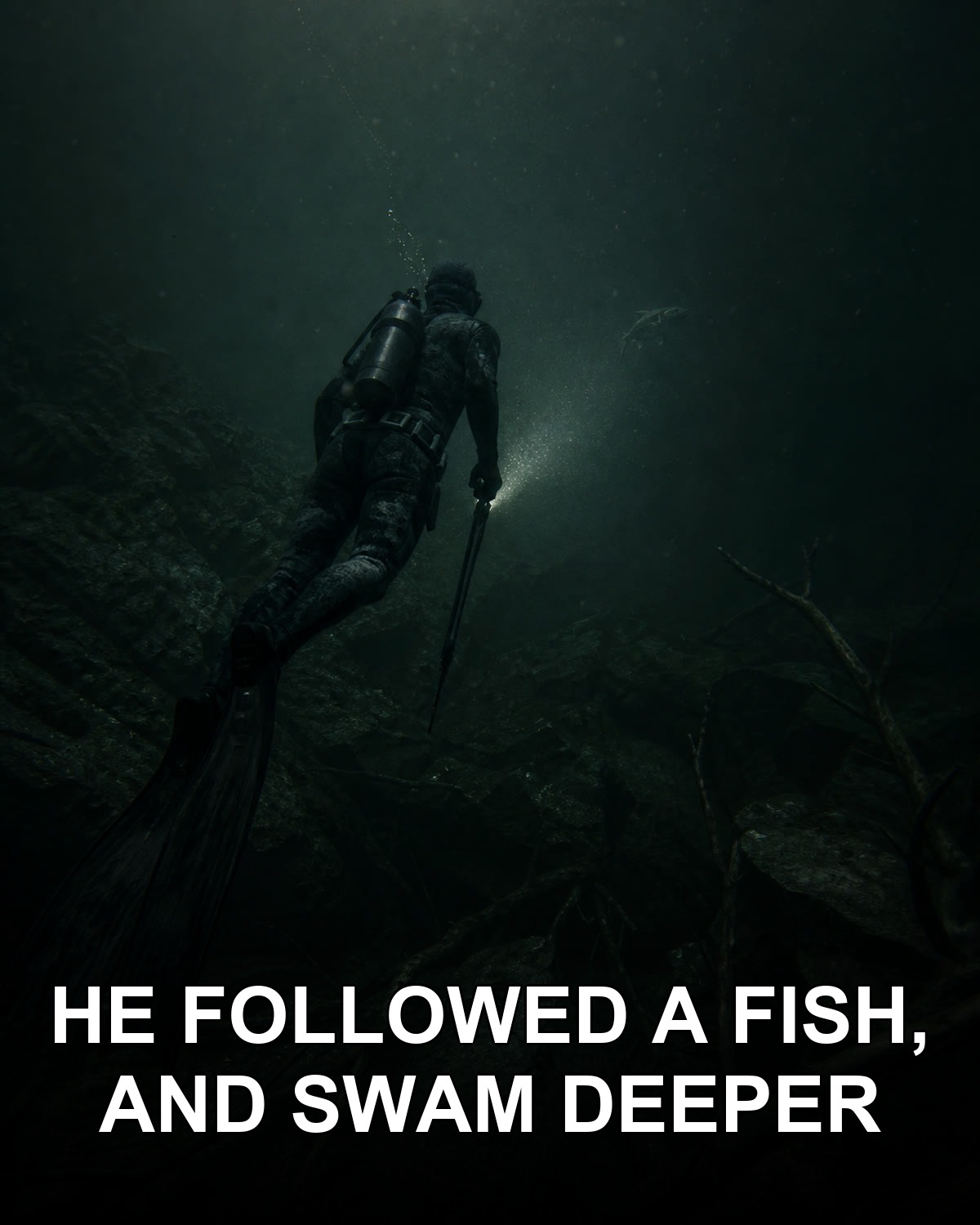
At 9:18 he went down a second time.
The two men in the boat sat watching the water. At first they could see bubbles and a faint glow moving below.
The night was six degrees. The lake was black and flat and stretched out to where you could no longer tell water from mountain. Only that small glow moved, drifting slowly under the surface, fading a little more each minute as the water swallowed it.
At the agreed time to surface, he did not surface.
Twenty minutes went by.
The bubbles thinned to scattered specks. The light weakened.
Then the lake closed over, black as it had been before anyone went in.
The two boatmen ran circles around the area, sweeping the water with torches. There was no trace of Zhao.
Then they called the police.
That night and over the days that followed, the local volunteer rescue team, the fire service, and the Blue Sky search team all arrived at the site in turn.
They searched open water — the parts of the lake with nothing overhead.
That is the correct way to search, by ordinary logic: a diver in trouble either sinks to the bottom or is carried off by the current. Both cases put him in open water.
Nothing.
A dive team from Chongqing then took over. They used sonar and divers at the same time.
Still nothing.
Half a month passed.
Half a month is a cruel milestone, because by then nobody uses the word "rescue" any more. What is being done is body recovery. Everyone understands that, including the family.
It is only that nobody has said it out loud yet.
At about this point, the searchers began to consider another possibility: that Zhao had gone into one of the caves nearby.
The most likely candidate was Laizi Cave.
Laizi Cave is one of the caves that went under the lake in 2004. Its entrance is shaped like a trumpet mouth. The surveyed portion is roughly the shape of a gourd or a peanut: pinched in the middle, with the two ends opening out into chambers. Inside there are stalactites and columns running from floor to ceiling.
The cave also carries a story told locally. People say that in the past, people with leprosy were brought here to be isolated, and that a good number of them died inside — and that, by the same telling, is where the cave's name comes from.
This is local oral tradition and no document confirms it. But in Guizhou the use of natural caves to isolate leprosy patients did genuinely happen, so the story is not without a root.
The immediate problem was far more practical: entering a flooded cave requires a cave diver. That is a separate certification and a separate discipline.
There was nobody like that on site. There was nobody like that locally either.
Zhao's family began appealing for help online.
The first person the family reached was a dive instructor in Guangxi — they were still in contact with him as of 21 February.
He put them in touch with divers inside Guizhou itself: the Guiqian dive club in Guiyang, regarded as the province's first and, at that point, still its only dive club with training in the international system.
Four names: Zhang Xudong, Guo Jie, Zhou Yuanjie and Cai Yichao.
On 20 February, the Guiqian team made its first dive.
At a depth of between 21 and 24 metres, they found the entrance to Laizi Cave. The floor of the passage inside was fairly level, but thick with silt.
They divided the work: one man laying line and searching the upper level, one man following the line around the body of the cave.
Inside, the cave looked like nothing that could be drawn on paper. The floor rose and fell, the ceiling dropped and then shot up again, and columns joining floor to ceiling stood scattered through the dark like a drowned forest. A light beam swept across it lit one patch at a time; the rest stayed black.
By the end of the day they had a rough grasp of the shape of Laizi Cave.
They did not find Zhao.
They did not have enough people or equipment to guarantee both effectiveness and safety. They decided to stop and resume after the Lunar New Year.
That New Year, in one household in Guizhou, there was an empty seat that nobody was yet permitted to name.
On 1 March the third search began. The target was the whole of Laizi Cave, including passages nobody had entered.
They covered almost all of it.
Still no Zhao.
One narrow passage at the far end remained, but they judged that a man in that situation would not have gone into it. So they came back out to the entrance to look for other leads.
And it was while searching outside that Cai Yichao saw something.
About two metres below the entrance to Laizi Cave, there was another cave. An unsurveyed one, with no name.
Its mouth cut into the rock face at an angle, which made it very nearly invisible. Without looking hard, a diver would swim straight past it.
At that depth the water has no colour left. Everything is a different shade of grey, and that crack was the darkest grey of all — a streak that gave back no light at all, tucked under a lip of rock.
For twenty-five days everyone had been searching open water, and then the cave that had a name. The cave with no name was right there, two metres from where they had been going in and out every day.
Cai Yichao tried entering it.
Inside was a tube — rough, tight. He swam in about fifteen metres and found the space widening out, and continuing further ahead.
Then his primary reel jammed.
He had to turn back.
On 2 March, the team committed to the unnamed cave.
Zhou Yuanjie stayed at the entrance in support. Guo Jie and Cai Yichao went in.
The passage was narrow and the silt was deep. Swimming bodies and exhaled bubbles knocked silt off the walls in sheets, and it came down through the water in clouds. Visibility fell away very fast.
So they went very slowly.
In that tube the light reached only a couple of body lengths. Silt shed from the walls hung in brown clots, turning slowly in the current the divers made themselves. There was no sound except breathing through the regulator and the bubbles knocking against the rock ceiling overhead.
Seventeen minutes in, the two men had made about twenty-five metres. They were coming round a bend into a wider chamber.
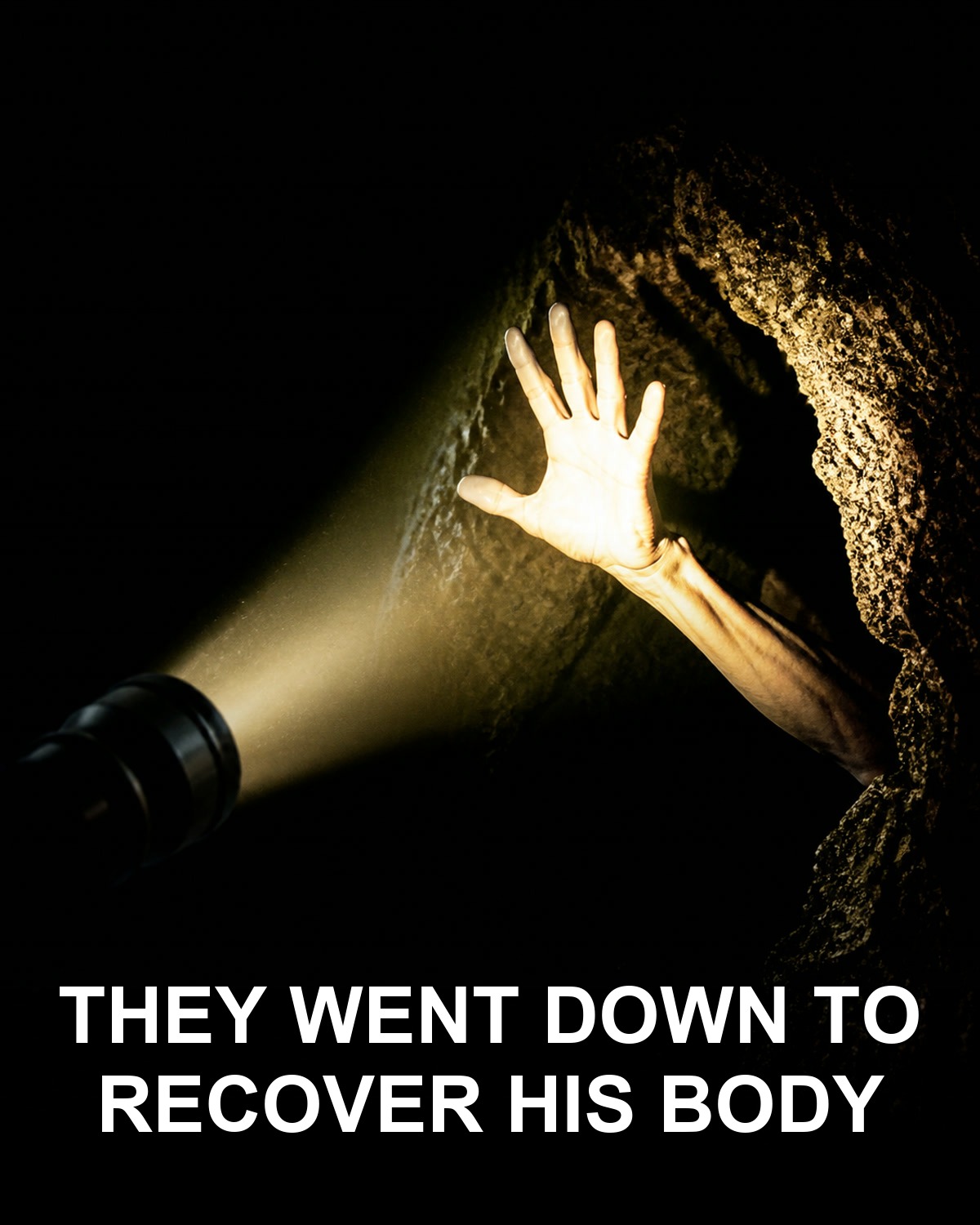
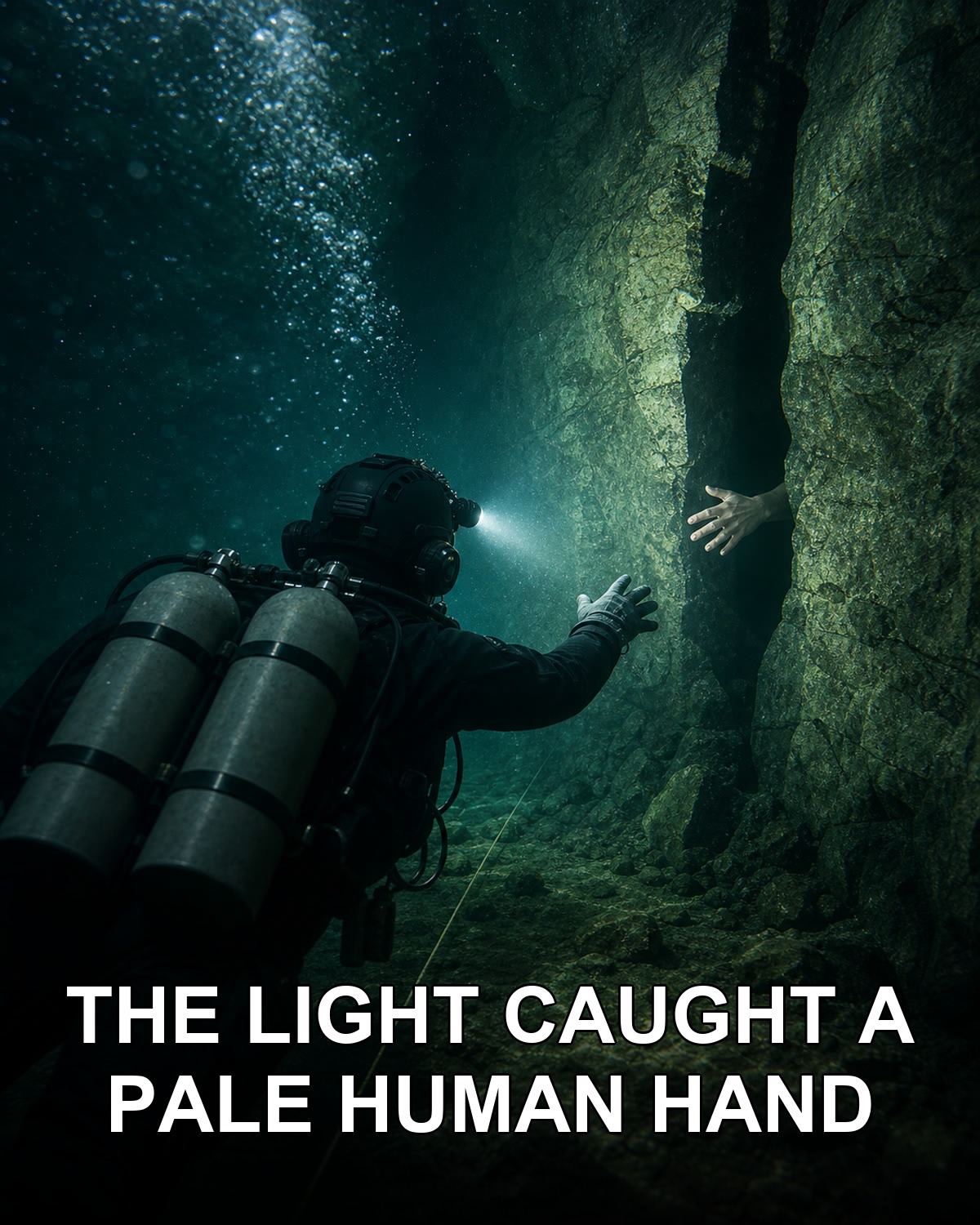
And ahead of them, above the cave floor, a human shape hung in the water.
It was Zhao.
Depth about 32 to 33 metres.
Twenty-six days since the night he went in.
His regulator had come out of his mouth. His weight belt had slipped down and caught around his ankle.
That dive had been for searching; they had brought no equipment for bringing a person out. The two men turned back — the first task was to carry the news out of the cave.
Once the team had worked out a plan, they went back into the water the same day.
This time Guo Jie held the entrance and the other two went in. Cai Yichao took on the job of moving Zhao; Zhou Yuanjie followed behind, handling the line.
But the visibility was too poor, the passage was too tight, and they had to account for the gas left in their cylinders.
They were forced to stop halfway.
Zhao was left at a bend about fifteen metres from the entrance. The two men swam out.
Tomorrow they would refill their cylinders and come back.
3 March was the Lantern Festival.
It was also Zhao's birthday.
That morning the search party went out on the lake again. This was the Guiqian team's seventh dive.
They set decompression cylinders along the ascent route in advance. Zhang Xudong and two others supported from the surface. Guo Jie held the mouth of the unnamed cave. Zhou Yuanjie and Cai Yichao went in.
At the bend fifteen metres from the entrance, they found him again.
Then they did a series of things very calmly and very slowly, in the dark, at thirty metres, with their gas counted out in minutes.
Zhou Yuanjie covered Zhao's head — so that his face would not be knocked against anything as he was drawn through the narrow section. He removed the buoyancy jacket and the hoses from Zhao's body. Then he turned him round, with his feet towards the cave mouth, and tied his ankles together.
That is a technical procedure. But looked at closely, it is also something else: in a dark silted cave, a man taking care that a stranger's face would be intact when it was given back to his family.
Zhou Yuanjie pulled on the line and backed out. Cai Yichao followed, recovering line.
The narrow tube was the hardest section. Silt boiling up, the passage tight, and no hand free.
Eventually they reached the entrance.
Zhao's equipment was sent up first with a lift bag. Three men worked together to bring him out of the cave. Zhou Yuanjie stayed with him, bringing him up on the proper decompression schedule.
At eight metres, the three divers stopped to decompress — they had to wait there for their own bodies to offgas, or they would become casualties themselves.
Zhao was drawn to the surface on a line by the men above.
He and all of his equipment were handed over to his family.
A search of twenty-seven days ended there.
WHY THIS HAPPENED
Why a strong swimmer can still die in an underwater cave
Zhao went into a tube some tens of metres long. That tube had one way in, and the same one way out. He did not find it again.
Because in a flooded cave, "the way I just came in" is not something you can see.
In open water, a diver in trouble always has one last exit: go up. The surface is overhead. It always is.
In a cave, what is overhead is rock.
The exit is no longer in the direction "up". It is in one specific horizontal direction, and only one direction is right.
Add to that the phenomenon cave divers call a silt-out: silt from the floor and walls is stirred up and visibility falls to near zero. A torch is useless at that point — aim it into silt and all you get is a murky glow.
That is why the guideline is regarded as the life-or-death piece of equipment in cave diving. When you can see nothing, the line is the only thing still telling you where the exit is. You follow it out by hand. You could do it with your eyes shut.
A man without a line has only his memory. And memory in the dark, with the breathing already fast, is the first thing to fail.
Fast breathing also carries a consequence you can put a number on: at 32 metres the pressure is about 4 atmospheres, which means every breath consumes roughly four times the gas it would at the surface. The more panicked you are, the faster the cylinder empties — and the emptier it gets, the more panicked you are.
On the sequence of events that night
Nobody witnessed what happened down there. What can be reconstructed is the reasoning of the people who did the searching, based on where he was found and the state of the equipment on him:
Zhao most likely chased a large fish at around 30 metres. The fish went into the unnamed cave. The entrance is narrow, but he was a small man, so he fitted through.
When he tried to come out, the silt had already been stirred opaque. He swam the wrong way, and the further he swam the deeper into the cave he went, until he reached the wider chamber inside.
Two details of his equipment are worth noting.
The first is the weight belt. For his height and weight, ordinary estimation would put a sensible weighting at around 6 kg. He was wearing
- Over-weighting is one of the most dangerous errors in diving: it makes you sink too fast, makes it hard to get back up, and makes it very hard to hold trim underwater. When he was found, his weight belt had slipped down and caught around his ankle — the trace of a man trying to get it off.
The second is the knowledge he had been handed. The man who sold him the gear had told him that underwater, if anything goes wrong, just inflate and go up.
That advice is correct in open water. In a flooded cave it is lethal advice, because there is no surface above you, only rock.
Put another way, what Zhao bought that day was not only a set of used dive gear. He also bought a body of wrong understanding, passed down from a man who had never had formal training either — and one of those wrong things may have decided whether he lived or died.
Legally, those waters also fall under the Yangtze basin's ten-year fishing ban, which applies to the Guizhou section of the Wu River main stem from 1 January 2021 to the end of 2030.
A point easily misread, stated plainly
The figure of 27 days is the time from the night he went missing to the day he was brought out of the cave. It does not mean he was alive in the cave for 27 days. He was found on day 26, and from the first half-month onward the operation had been defined as body recovery, not rescue.
To be equally clear about the story of leprosy patients dying inside the cave: that is a local oral tradition attached to Laizi Cave, not a verified conclusion, and it has nothing to do with the cause of the accident. The place where Zhao died was not Laizi Cave in any case, but the unnamed cave below it.
And about the people who went looking
There is a line of work whose greatest reward is returning a dead man to his family.
Divers who recover bodies from flooded caves take on exactly the risks that killed the person they are looking for: the same silt, the same dark, the same depth, the same gas counted out in minutes. The only difference is that they have certification, a line, a support diver at the cave mouth, decompression cylinders hung along the route up, and a plan discussed carefully on shore before anyone gets in the water.
The entire difference between living and dying in this story fits inside that list.
On the last day they went into the water on the Lantern Festival — the day of family reunion in China — and on the birthday of the man they had gone to find.
Sources
- https://zh.wikipedia.org/zh-hans/洪家渡水库
- https://baike.baidu.com/item/洪家渡水电站
- https://fgs.moa.gov.cn/flfg/202002/t20200217_6337172.htm
- https://nynct.guizhou.gov.cn/gzcy/rdhy/202011/t20201113_65210785.html
- http://gzw.guizhou.gov.cn/xwzx/qyzc/202012/t20201202_65461260.html
- https://news.qq.com/rain/a/20200911A0NAAJ00
- https://zh.wikipedia.org/zh-hans/洞潜
- https://www.humanrightseducation.cn/archives/3608
- https://www.bilibili.com/video/BV1kdwuzXEs7/
- https://www.mcndata.cn/c/2033142078225125376
AI-generated illustration. Not a photograph of the actual incident.