Fifteen days later, they went down to recover his body
A fisherman went into an unmapped flooded cave in Oaxaca with a spear and no guideline. Fifteen days later the search had become a search for a body.
He did not carry a guideline reel.
He carried a small air cylinder and a spear, and that was all. On the afternoon of 23 July 2026, Erasto Crisanto Valdez went down into a flooded cave in the forest to catch fish with his father.
The place lies near San Francisco La Paz, in the municipality of Santa María Chimalapa, in the state of Oaxaca, southern Mexico — right up against the border with Veracruz.
It is not a tourist site. No concrete steps, no floats, no guide, no sign of any kind. Below the surface is a cave system nobody has ever surveyed and nobody has ever mapped.
Valdez was thirty-one. He fished for a living.
He had no cave diving certification. He had no backup light, no dive watch, and — most importantly — no guideline reel, the thing professional cave divers treat as their second life. Because in a dark cave, when visibility shrinks to the length of your forearm, the line is the only way to know which direction the way out lies in.
That afternoon the two of them went into the water.
Then each man followed his own fish.
Valdez saw a robalo — a snook.
He went after it.
The chase took him deeper in. The fish slipped into a crack in the rock; he followed it through. The water around him grew murky — not murky with silt, but murky because the light had run out.
Then the fish was gone.
Valdez went to surface. That is the reflex of a man used to diving rivers: when the air runs out, go up, because the surface is always overhead.
But what was overhead was not the surface.
He was inside the cave.
He tried to find his way back. In a flooded cave, though, every wrong turn takes you one turn further from the exit, and he had nothing to mark anything with. The more he panicked, the faster he breathed. The faster he breathed, the faster the cylinder emptied.
That small cylinder emptied very quickly.
Then he blacked out.
When he came round, he was lying on dry rock, in an air-filled chamber somewhere in the body of the cave.
On the surface, his father came up first and sat waiting for his son.
He waited. Then he understood that something was wrong.
He put his mask back on, went down, and swam around under there looking. He could not find his son.
Then he raised the alarm.
There is one detail people in the area repeat, and if it is true it makes that afternoon far heavier than it looks from outside: according to local accounts, sixteen years earlier, this man's younger brother had also died in this same cave.
Which means he had once already sat at the mouth of that cave, waiting for someone who did not come up.
And now he was sitting there a second time.
The search began with the people closest at hand: relatives, neighbours from the area, then civil protection units. Later, divers from the Mexican Navy joined.
On 26 July, Valdez was formally reported missing.
Not long after, searchers found his fishing spear, lying roughly sixty-five metres in from the cave entrance.
That was the only trace.
The dives that followed turned up nothing more. Nobody knew how many branches the system had below. Nobody knew where those branches led.
On the surface, people began doing a very simple piece of arithmetic.
One small cylinder, at that depth — how long does it last?
Not long.
And how many days had gone by?
It was the kind of sum nobody needed to say out loud.
On 30 July, the Navy ended its operation.
The municipal government of Uxpanapa said the search was continuing, and the following day it sent a request to a group of experienced cave divers.
But by this point, what they were looking for was no longer being described as a person.
The man who took the call was Harry Gust, an American cave diving instructor living in Tulum. He came with the Mexican diver Rosalino "Rosso" Rivera. On site they were joined by the cave specialists Robbie Schmittner, Phillip Lehman, Jonathan Rivera and Carlos Jiménez.
Gust has said that when he was invited, the job as it was put to him was body recovery.
Nobody told him this was a rescue. Because by then nobody believed there was anyone left to rescue.
On the first day he went into the cave alone.
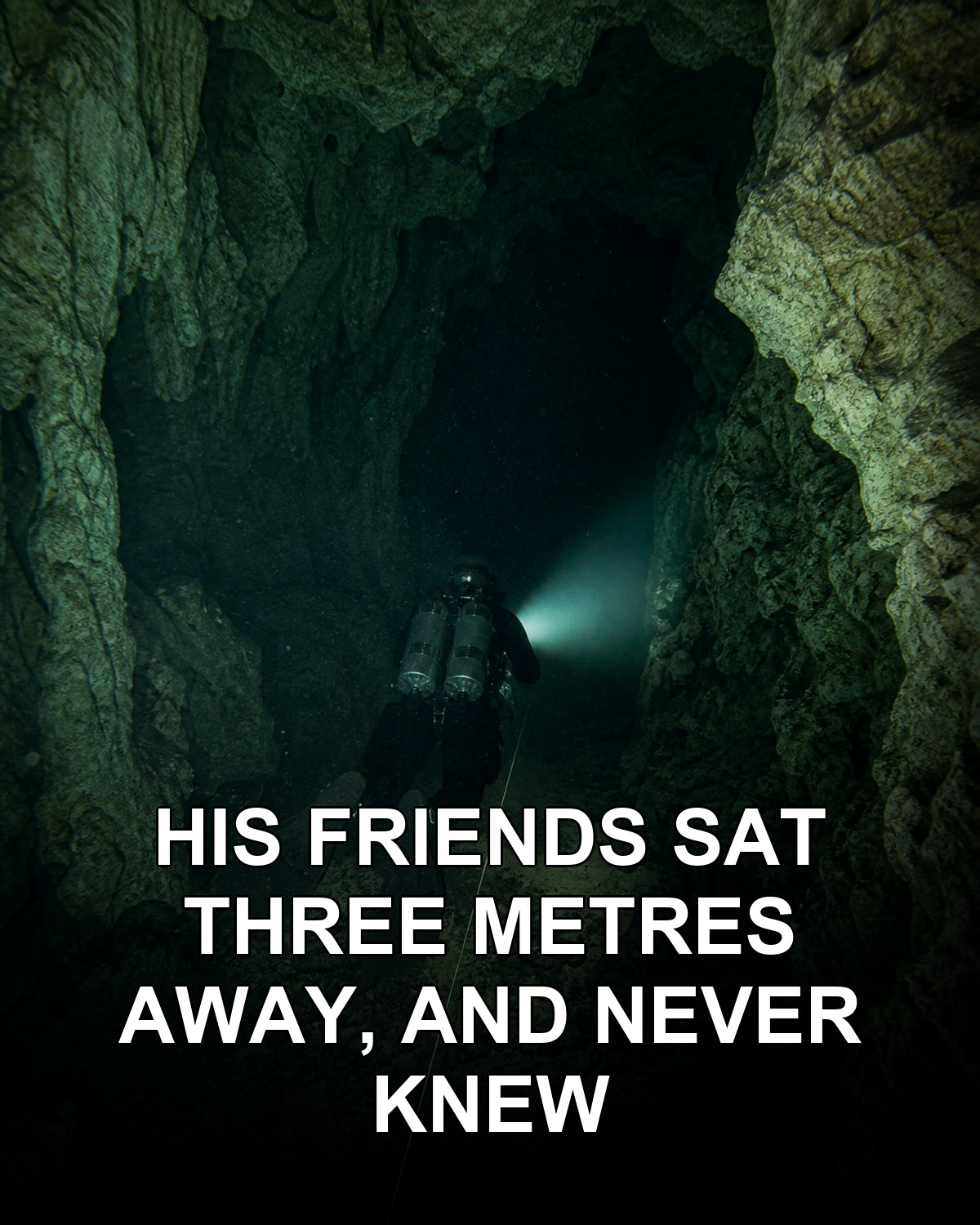
Seventy-five minutes underwater, in conditions he himself described as close to blind. Visibility not more than a metre. The rock inside was sharp enough that laying a continuous safety line was very difficult — and without line, the people coming in behind have no way out either.
He swept three times, along three different headings.
About a hundred metres in, his light stopped on an object lying on the cave floor.
A small emergency cylinder.
He knew what that cylinder meant. Where a man leaves his cylinder, the man is usually not far away.
His gas was done for the day. He followed his line back out.
The next day he went back.
About thirty minutes after entering the water, Gust noticed something strange: the water above his head was gone.
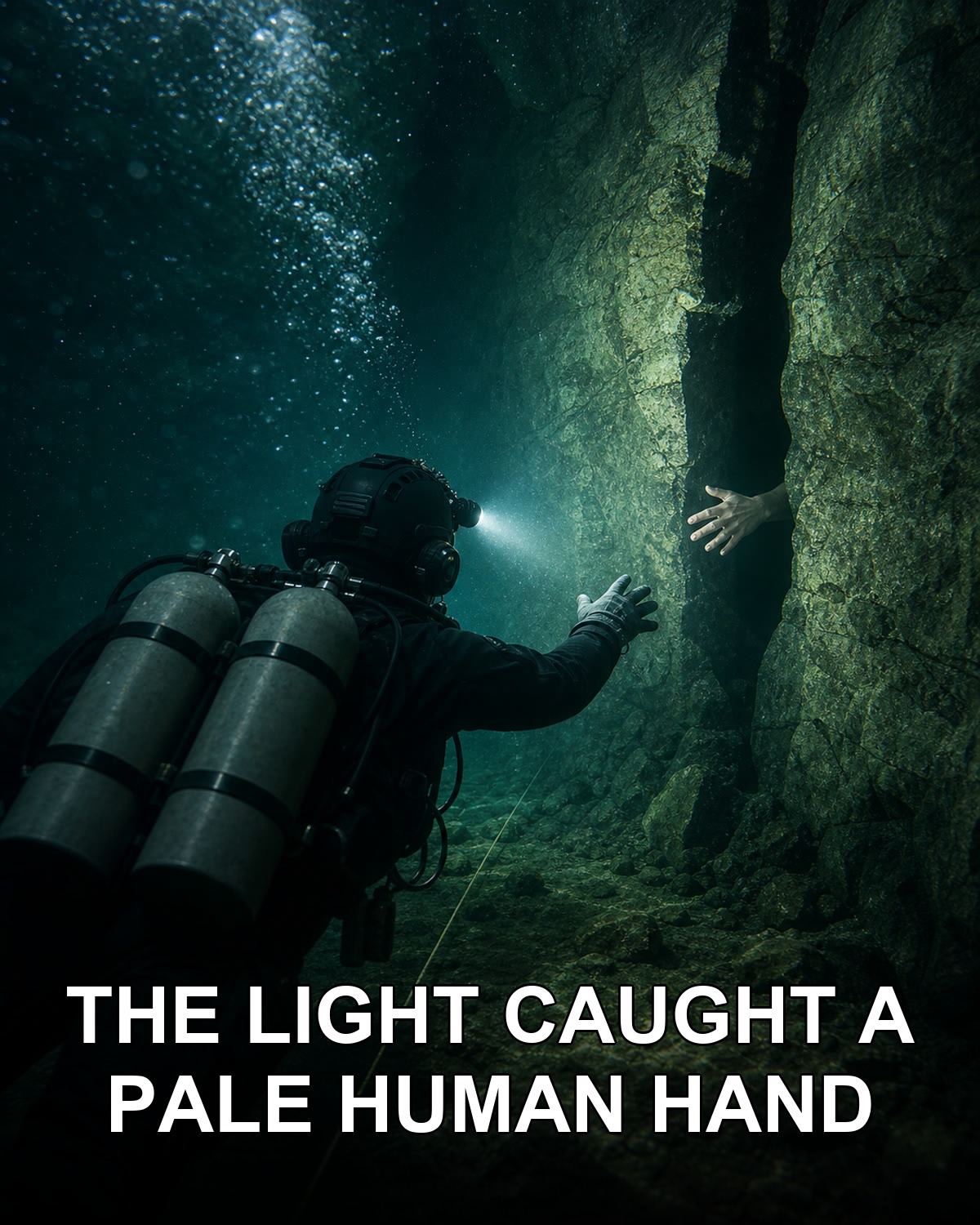
He put a hand up. The hand came out of the water.
He surfaced and swept his light around. In front of him was a large dry chamber, and not far off, an underground river running fast, maybe two metres across.
Then he did something he probably could not explain himself.
He shouted into the dark, asking whether anyone was in there.
Something answered.
Valdez was another ten metres or so further in, tucked into a recess in the cave wall. Gust could not see him. He only had time to say that he would come back with help.
He went out. At the surface, he told the people standing on the bank — people who had spent days preparing themselves to receive a body.
Then he went back down with Rosso Rivera.
Rivera took his cylinder off his back to get through the dry section, reached Valdez, and walked him to the water's edge to see whether he had strength enough for the trip out.
The lucky part was that Valdez knew how to use a mask and a regulator.
He was severely weakened and badly dehydrated. But he could breathe from Rivera's backup supply, and he swam out on it.
According to Gust, the whole group left the cave without a single incident. At the surface they handed Valdez to the support team waiting above.
That day was 7 August.
Valdez was taken by ambulance to the Uxpanapa Regional Hospital, severely dehydrated and having lost a great deal of weight.
He was later discharged and went home.
He thanked the people who had come for him in a video posted by the local government, saying he did not know what he could ever give back for that much kindness.
That is the end of the account. But one question remains, the one everybody wants answered.
How does a man with no food survive fifteen days in the dark?
The answer is in three things.
First: the air chamber. When he blacked out and came round, he was not in the water. He was on dry rock in a pocket of air. He did not spend two weeks immersed, so he did not lose body heat — and cold kills faster than hunger.
Second: the underground river. Running through that same chamber was a stream of fresh water about two metres wide. For the whole time he was down there he lived on that water — and, by his own account, on prayer. A human being can go without food for a very long time. Without water it is a matter of days. That stream is what held him.
Third, and perhaps the strangest: he did not know how long he had been there. There is no daylight in a cave to mark the passing of time. No morning, no night, nothing to count.
So he lost his sense of dates entirely.
To him, it had been three days.
They told him it had been fifteen, sixteen.
And that, thought through, was its own kind of luck. If he had known he had been lying there for half a month — known that above him the search had stopped, that it had turned into a search for his body — his mind might well have collapsed before his body did.
One small note, because this is the detail most often misread when the case is retold:
Numbers like "sixty-five metres" and "a hundred metres" are not depths. They are penetration distance into the cave, measured from the entrance. The divers were not going down — they were going in. And in a cave nobody has ever mapped, going in a hundred metres is far harder than going down a hundred metres.
Sources
- Dive Magazine (direct quotes from Harry Gust) — divemagazine.com
- Gobierno Municipal de Uxpanapa, official Facebook page
- Harry Gust, Facebook (his own post correcting misinformation circulating about the case)
AI-generated illustration. Not a photograph of the actual incident.