A white hand came out of the rock after seventy-two hours
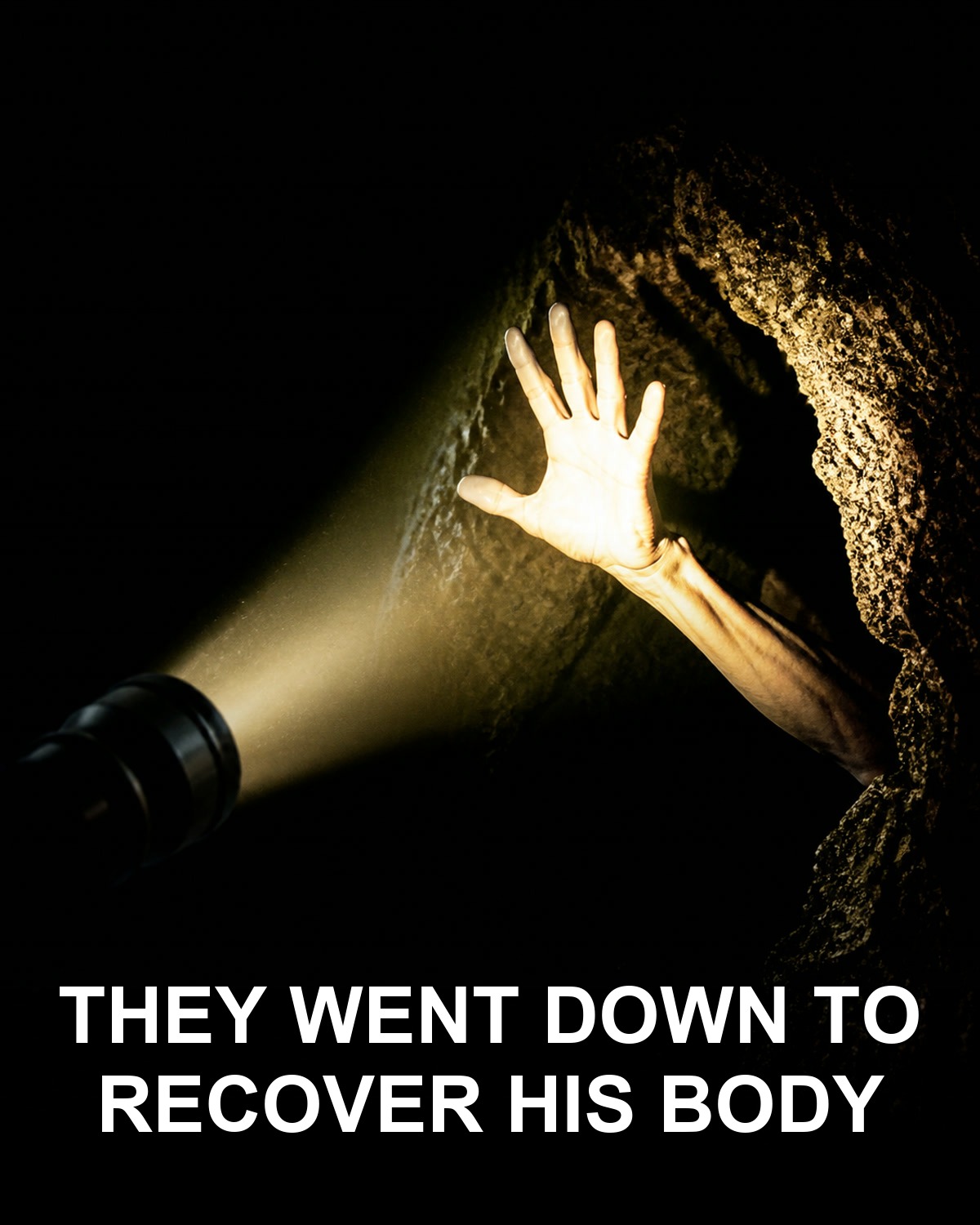
Two rescue divers had been trained for exactly this moment: after three days underwater, you find a body. Their lamps swept across a bloodless human hand.
The hand was bloodless white, the skin wrinkled from too long in the water.
It was the evening of 8 February 2025, deep inside a Guangxi limestone mountain. Two rescue divers were rising along a guideline when their lamps swept across it.
Both men thought the same thing. After seventy-two hours, this was the thing they had been trained to prepare themselves for: a body.
Then the hand moved.
To understand why those two divers were down there at all, you have to go back three days.
The cave lies in Tianyang district, in the city of Baise, Guangxi. It is not a show cave. No coloured lights, no paved walkway, no ticket booth. This is where the Huowang river begins — the drinking water for a string of villages along the basin.
The entrance is a slope of loose broken rock with very little to stand on.
Inside, the shallows glow green, and a little further out the green turns to black — black not from dirt, but because it is too deep for light to reach the bottom.
Those black patches are a roughly oval water chamber about two hundred metres long and eighty metres across at its widest. Divers call this part the outer cave. From the surface up to the rock ceiling is about thirty metres at the highest point. The bottom lies more than fifteen metres down.
And that is only the part a person can see.
Deeper still, eighteen metres below the surface, two openings bite further into the mountain — one on the left, one on the right. The right one is small. The left one is wide, wide enough that in poor visibility a diver could swim straight into it while still convinced he was out in open water.
Behind those two mouths lies the inner cave.
Nobody had ever mapped it.
On 5 February 2025 — the eighth day of the first lunar month, the first working days after the Spring Festival — a scientific survey team arrived.
They had not come to explore. They had come to look for cave fish: species that live their entire lives in darkness, eyes degenerated, bodies nearly transparent, existing in one cave system and nowhere else on earth. In Guangxi, the people who do this work can be counted on your fingers.
Two of the men who went into the water that day would become the centre of this story. The first was Zhou Jiajun, thirty-six, a forestry engineer whose job is biodiversity survey and monitoring; among aquarists and nature photographers he is better known by a nickname, "Black Fish", the snakehead. The second was Zhou Shipeng, a graduate student in ecology at Guangxi University, researching the gut microbiome of cave fish.
He was the first man's student. On the team, the two of them were simply "big Zhou" and "little Zhou".
That day the teacher and his student made three dives in the outer cave. The first two passed without incident.
On the third dive, they turned back.
Big Zhou had a camera in his hands and was following the rock wall to find the way out. Little Zhou was behind him.
The problem with a flooded cave is not the depth. It is how fast the water fouls.
The walls and ceiling are coated in a fine silt laid down over thousands of years. It sits there undisturbed until somebody swims past. Exhaled bubbles hit the ceiling, the silt lets go, drifts down, dissolves into the water. The first diver can still see. The second is swimming through something the colour of milk.
Then visibility dropped to almost nothing.
Little Zhou lost the guideline.
The two men lost each other — and both of them, without knowing it, had swum through that wide left-hand opening into the inner cave.
Big Zhou realised it when he looked up and found that what was above him was no longer water. It was rock. There was no up any more. There was only in and out — and at that moment nobody knew where out was.
He pressed himself against the ceiling and felt his way along, section by section. After about a hundred metres, he looked at his pressure gauge.
The cylinder was nearly empty.
Then the water above his head disappeared.
He had swum into an air pocket — a bubble of atmosphere trapped in the rock, formed when rising water sealed off a hollow in the ceiling and shut the air inside.
He surfaced. He could breathe.
Big Zhou took off his wetsuit and wedged it into a crack in the rock. This was not panic; it was arithmetic. A wet suit pressed against the body in a cave barely above ten degrees pulls heat out far faster than sitting dry. Hypothermia kills in a cave faster than hunger, faster than thirst, and faster than a shortage of air.
He sat down, pulled himself into a ball, and began to wait. The pocket was no bigger than a small room, the ceiling curved down low and damp. There was only the dripping and the cold of the stone in his back.
Little Zhou, somewhere out in the dark, was in worse trouble.
His light had failed. Neither man was carrying a backup light.
When his only lamp went out, what surrounded him was not the darkness of a room with the door shut. It was absolute darkness, the kind in which open eyes and closed eyes are the same. What was left was the hiss of gas through the regulator, the gurgle of bubbles behind his head, and his fingertips reading off slick stone the shape of a cave he could not see.
He did not turn back. He kept swimming forward.
And like his teacher, as his gas ran down, he stumbled into an air pocket. His was larger — it even had a patch of dry ground he could climb completely out of the water onto.
That is what later kept him alive.
At seven in the evening, outside the cave, the rest of the team realised the two men had not come up.
They did what they could immediately: rowed a boat into the water chamber, hammered on the rock wall with something hard, listened. Then dived themselves to look.
Nothing.
After ten at night, they called the police. By then the two men had been out of contact for more than three hours.
That call reached the water rescue company of the Baise special police detachment, which had just come back to work after the holiday. After a long break everybody was sluggish, so the leadership had scheduled a heavy session to get their fitness back. Two of them ran until they were sick. Nobody expected a callout that day.
The unit had not been created for this work. It began as a patrol company under the Youjiang sub-bureau — motorcycle police on the city streets. Only in 2021 did they start learning technical diving.
Their cave rescue course, specifically, they had finished about six months before that night.
The team arrived when the two men had been missing more than six hours.
Statistically, this is the point at which a diving accident is considered over. Six hours underwater, no air, no warmth — you are no longer sending people to rescue, you are sending them to recover.
But on site that night — Tianyang police, the emergency management bureau, a Red Cross rescue team, a fire company, the city diving association — nobody said it out loud.
The rescue commander later described how he made the decision: whether the people inside were alive or dead, he was not permitted to decide that in advance. He had to get to the site, look, and only then conclude. Both plans — rescue the living and recover the dead — were already prepared.
The first thing they did was not get in the water. It was ask questions: who are the missing men, how far can they dive, how much gas were they carrying, where were they last seen.
Then they went into the cave and knocked on the wall.
Something came back, from perhaps a hundred metres away.
But there is always water dripping in a cave, and dripping inside a sealed rock chamber sounds much like knocking. The commander was not sure. He signalled his two colleagues to stand still — then told them to breathe more quietly, because he could not hear over them.
Three men stood inside a cave holding their breath, listening to a sound that might have been there and might not. The chamber was quiet enough that every drop from the ceiling was audible, each one spreading a ring across the surface before it died. Outside it was fully dark, and the cave mouth was only a patch blacker than the rock around it.
Finally he decided: run the live-rescue plan.
Because if something answered, there had to be an air pocket. If there was an air pocket, there was a direction. And if there was a direction, you follow it.
Eleven men made up the force that actually went into the water. On site, everyone was split into three groups: the search divers, the surface group running the boats, and the ground group handling cylinders and equipment repair.
Their main weapon was line. They used five two-hundred-metre reels, run in from the cave mouth and tied into a guideline system — a thousand metres of line for a cave nobody had ever surveyed. That line was not there to find the missing men. It was there so the rescuers themselves could get out.
Each rotation, the cave could only hold two or three people. Any more and more silt goes up, visibility gets worse, and everybody is blind together. Nobody was allowed to move fast either, because swimming fast burns gas and burning gas shortens the working time. Seen from above, the divers moved so slowly they seemed to be hanging rather than working.
Each dive was spaced two to three hours apart, to let the silt settle.
That was the longest part of this rescue: sitting on the bank, knowing somebody was waiting below, and waiting for the water to clear.
At half past four on the morning of 6 February, on the third dive, working through what was the fourth air pocket, the team's lights found big Zhou.
The spot was sixteen metres deep, about three hundred metres from where the rescuers had started.
He had been sitting there nine and a half hours.
The diver who reached him later described something strange about himself: on seeing a living man, he said nothing at all. Because he had the line in his hand, and the job in his hand was not finished. If emotion made him let go of that line, the rescuers would become the trapped men. So he finished his part of the work first.
Once that was done, the first question they asked big Zhou was: is it just you here? Nobody knew how far the pocket extended, and the other man might have been in a corner out of sight.
Big Zhou said he was alone. Then he told them that when he had knocked on the rock, he had heard something knock back, from off to one side.
That did not match what the people outside the cave had said. The rescue team recorded both and hurried to believe neither — but it gave them something valuable: the second man might still be breathing, and might not be far.
At six in the morning, after eleven hours trapped, Zhou Jiajun was brought to the bank. He thanked everyone standing there, over and over.
Then they all went back down for the other one.
They thought it would be quick. Getting the first man out meant the survival mechanism was proven: there were air pockets, a man could reach one, a man could stay in one. The commander decided immediately to continue with the live-rescue plan and fight for every hour.
The cave did not cooperate. It was more complicated than anything they had pictured. The passages did not run straight. Some sections narrowed to a single person, then a few metres on opened into a void. Nobody knew how many side passages there were, or how many chambers.
The team split in two: one prong working upward through the air pockets above, the other going deeper to read the cave's structure.
The 6th became the 7th. The 7th became the 8th.
Then it rained. The temperature dropped. The water in the cave connects to an underground river, so it has a current of its own — and the rain made it dirtier than during the search for the first man. One team member dived again and again, lost core temperature, and came down with a fever.
Here something has to be said that the news bulletins left out.
There was nowhere in the area to sleep. The nearest town did not have a single guesthouse. Which meant that every night, finishing around four or five in the morning, the whole team drove back to Baise — to sleep, and to refill cylinders and check equipment. They usually got in at six. At one in the afternoon they got up again, ate, and drove back to the cave.
On the third day, on the drive back, the man at the wheel was so tired that by his own account he no longer had the sensation of driving.
He stopped the car and swapped. Over that one short stretch of road, they changed drivers two or three times.
On the morning of 8 February, little Zhou was still missing. More than sixty hours had passed.
At half past five in the evening, the team went in for the ninth dive. The count of air pockets checked had reached eleven.
The first pair were Xu Shide and Wu Xinghao.
This time they got lucky: the hours of rest had let the silt settle, and the water was clearer than on any previous dive.
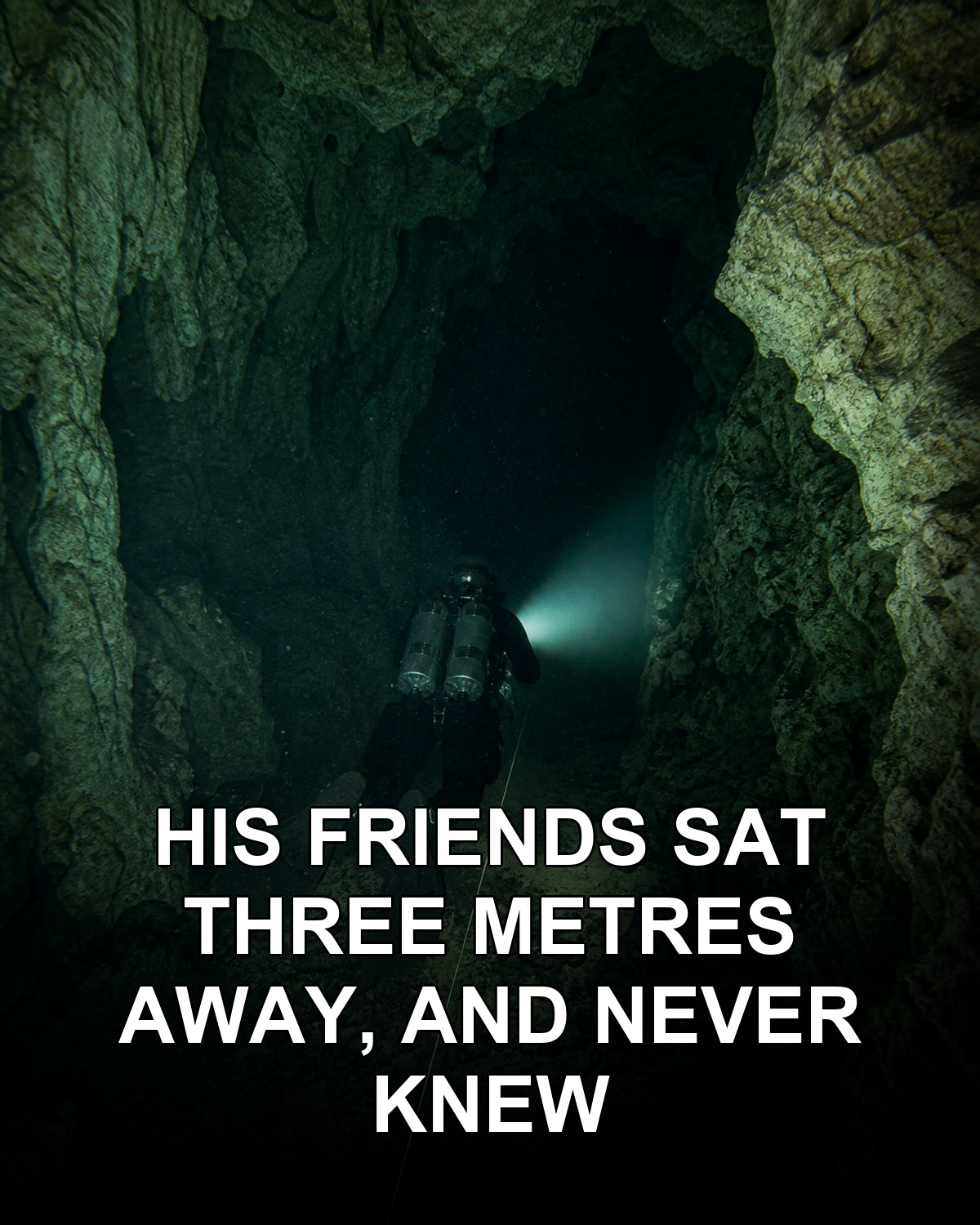
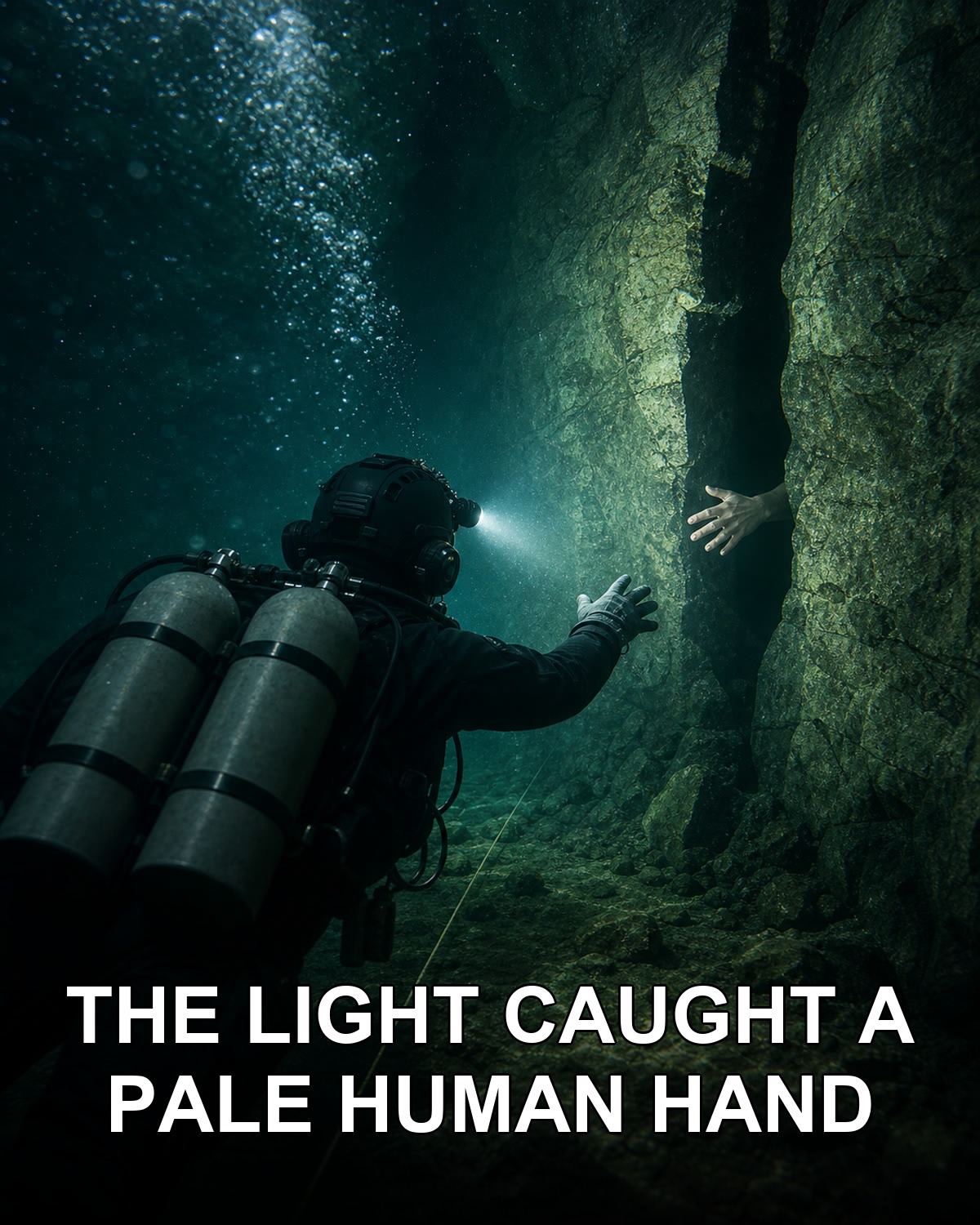
The two swam one behind the other. At twenty-eight metres they finished checking the chamber ahead and began to rise slowly. The lead diver checked his gauge: about one metre thirty below the surface.
This time the water was clear enough for the beam to carry, cutting through the blue-black as a column with edges. He lowered his hand and turned the light onto the wall.
And a hand appeared right in front of the second diver's face.
Bloodless. Wrinkled.
Both men froze. In that moment, the lead diver later admitted, he was genuinely startled.
Then the hand waved. Waved and kept waving, the way a man waves when he is fighting for something.
It was Zhou Shipeng, about five hundred metres from the cave mouth, after seventy-two hours.
The time was 18:50 on 8 February.
What had happened was this: from the dry ground in his pocket, little Zhou had seen the glow of the rescuers' lamps sweeping past underwater. He was afraid they would pass him by, afraid he would miss this one chance.
So he jumped into the water to get in front of them.
Finding him was one thing. Getting him out was an entirely different problem, and far harder than the first time.
Little Zhou's certification was Open Water, the most basic grade, limited to eighteen metres. The way out from where he was standing ran through twenty-eight metres. The commander explained it in one sentence: underwater, another ten metres is not the same as another ten metres on land. And a panicking man who thrashes and grabs can drag a rescue diver down with him.
Inside the pocket, the rescuers' lights threw a glow onto the wet stone dome. The man sitting there had been sitting for three days, and the cold of the rock came up through where he sat and did not stop.
One rescuer stayed in the pocket with him so he would be less afraid. The other swam out to report and work out the plan.
What they chose was a three-layer escort. One man leading him. One man swimming slightly behind and slightly above him — above, never below, so that if he bolted upward there was someone in position to stop it. A third at the back watching the group. A fourth waited at the inner cave mouth, at eighteen metres, as backup.
That caution turned out to be necessary.
Coming out of the inner cave mouth, little Zhou saw light coming down from the surface. After three days in absolute darkness, that light meant living. Survival instinct took over and he shot straight up.
Ascending straight up from eighteen metres is one of the fastest ways to die underwater — the lungs expand suddenly, and compressed gas in the blood has no time to come out.
The man beside him grabbed him, pulled him back down, held him, and talked him calm: stay with us, up a little at a time, slowly.
He listened. And so they brought him up metre by metre.
At 20:30 on 8 February 2025, Zhou Shipeng broke the surface in the outer cave.
Seventy-three hours — seventy-two until the rescuers touched his hand, and another hour and a half to get him out.
On the bank, people cheered.
The commander was not there.
By convention, the commander is the one who brings the survivor ashore and closes the operation. He did not. He turned the boat around and went back in — because some of his men were still down there finishing the recovery of equipment, and he wanted to wait for them.
Later, asked what was in his head at that moment, he answered with something that had nothing to do with the achievement. He said that a few days earlier one of his men had joked that if this job worked out, that night he wanted a late supper, something really good.
He had said yes, no problem. When we get back I will arrange it.
Those few days they had not really eaten and had not really slept.
As for little Zhou, after seventy-three hours in the dark with nothing to eat for three days, the first thing he said when he saw his teacher again was not about his family and not about fear.
He told Black Fish that the cave he had been lying in for the past few days had a species of golden-line barbel in it.
His teacher was visibly delighted.
Both men were taken for medical checks. Neither was in danger. After a period of observation, both were discharged.
The case was later recorded as the first cave-diving rescue in China to bring anyone out alive.
The story ends there. But without the following, it is hard to see why that is considered so rare.
Why cave diving is called the most dangerous discipline
Open-water diving and cave diving look alike, but they differ on exactly one point, and that point decides everything: in a cave, there is no surface above your head.
In the sea, every emergency has the same final exit — up. Equipment failure, out of gas, panic: go up. In a flooded cave, up is rock. Every emergency has to be solved on the spot, underwater, in the dark, with exactly the gas already on your back.
Three things kill people in caves.
The first is loss of orientation. When silt comes up and visibility goes to zero, a diver can no longer tell in from out. This is why the guideline is treated in the trade as a second life. It was losing the line that separated the teacher and student in this story.
The second is gas. The rule of thirds says one third going in, one third coming out, one third held in reserve. Everybody knows it. But under stress breathing rates double or triple, and a cylinder that looked like an hour can be empty in twenty minutes.
The third is depth. Below about thirty metres, the nitrogen in compressed air produces what divers call narcosis — the mind goes hazy, judgement slows. Deeper still, oxygen itself turns toxic.
Put those three together and you get a statistic repeated over and over in the industry: cave diving causes more diver deaths than any other form. An international technical diving instructor said after this incident that cave diving demands very strict standards of training, experience and equipment, and is not for ordinary recreational divers.
Why they did not bring in more people, and why they did not use robots
For three days, there were never more than two or three people in the water. Not for lack of volunteers. In the whole of China at that time the number of people qualified for cave rescue diving was very small, and calling anyone in from elsewhere would have taken at least two or three days — but even then it would have been useless, because the cave could only hold that many per rotation. More divers means more silt, and everybody blind together.
Robots were not a substitute either. The commander explained that in a cave nobody has surveyed, a robot has nothing to follow, its cable snags easily, and its thrusters stir up silt more violently than a swimming human.
Why a live recovery from a flooded cave is almost unheard of
Because in this kind of accident, time is not measured in days. It is measured in cylinders.
A person trapped underground usually lives exactly as long as the gas he is wearing. So in most incidents, by the time professional rescuers have assembled, brought the equipment, surveyed the cave and laid line, it has been too late for a long while. Cave rescue diving worldwide is mostly the work of finding bodies and bringing them out.
In this case, three things had to coincide.
The first was the air pockets. Both men, independently, swam into atmosphere trapped in the rock. Those pockets cut the countdown clock — they were no longer dependent on the cylinder on their backs. Little Zhou's pocket also had dry ground to climb onto, and that is the core reason he lasted as long as he did.
The second was how the two men behaved down there. They did not swim around wildly and did not try to find their own way out. Take off the wet suit, stay warm, sit still, wait. It sounds simple, but sitting still in absolute darkness for three days without pushing yourself into a fatal decision is very hard to do.
The third was that up top, nobody switched to body-recovery mode.
The most memorable detail of this case is not the pale hand. It is the decision at the six-hour mark, when every number said there was nobody left inside to save, and the commander still chose the live-rescue plan — because of one knock coming back that he himself was not sure was real.
If he had chosen the other option that night, the two men would still have been sitting in those stone chambers.
Only nobody would have arrived in time.
One more note to close the circle. In July 2025 the same unit was called out again. A man in Yongshun county, Xiangxi, Hunan province, had swum into a flooded cave and been trapped for five days. The local force did not have the capability and had to send a formal request for assistance to Guangxi. The team drove more than eight hundred kilometres overnight, and found the man in an air pocket thirteen metres down, eighty metres from the cave mouth.
He was alive.
Sources
- https://mps.gov.cn/n2255079/n5137689/n5414444/n5414452/c9982886/content.html
- https://news.cn/20250226/831eb5b1aec245239058f27bd4000092/c.html
- https://news.cctv.cn/2025/02/28/ARTIdLVaz90QnIYosYNpoxfx250228.shtml
- https://m.thepaper.cn/newsDetail_forward_30697805
- https://thepaper.cn/newsdetail_forward_30267565
- https://news.qq.com/rain/a/20250321A00XM400
- https://xhby.net/content/s67c0f893e4b06b14f8ccf495.html
- https://news.qq.com/rain/a/20250725A06LPT00
- https://whwb.cjn.cn/h5/html5/2025-07/28/content_48093_2450311.htm
AI-generated illustration. Not a photograph of the actual incident.