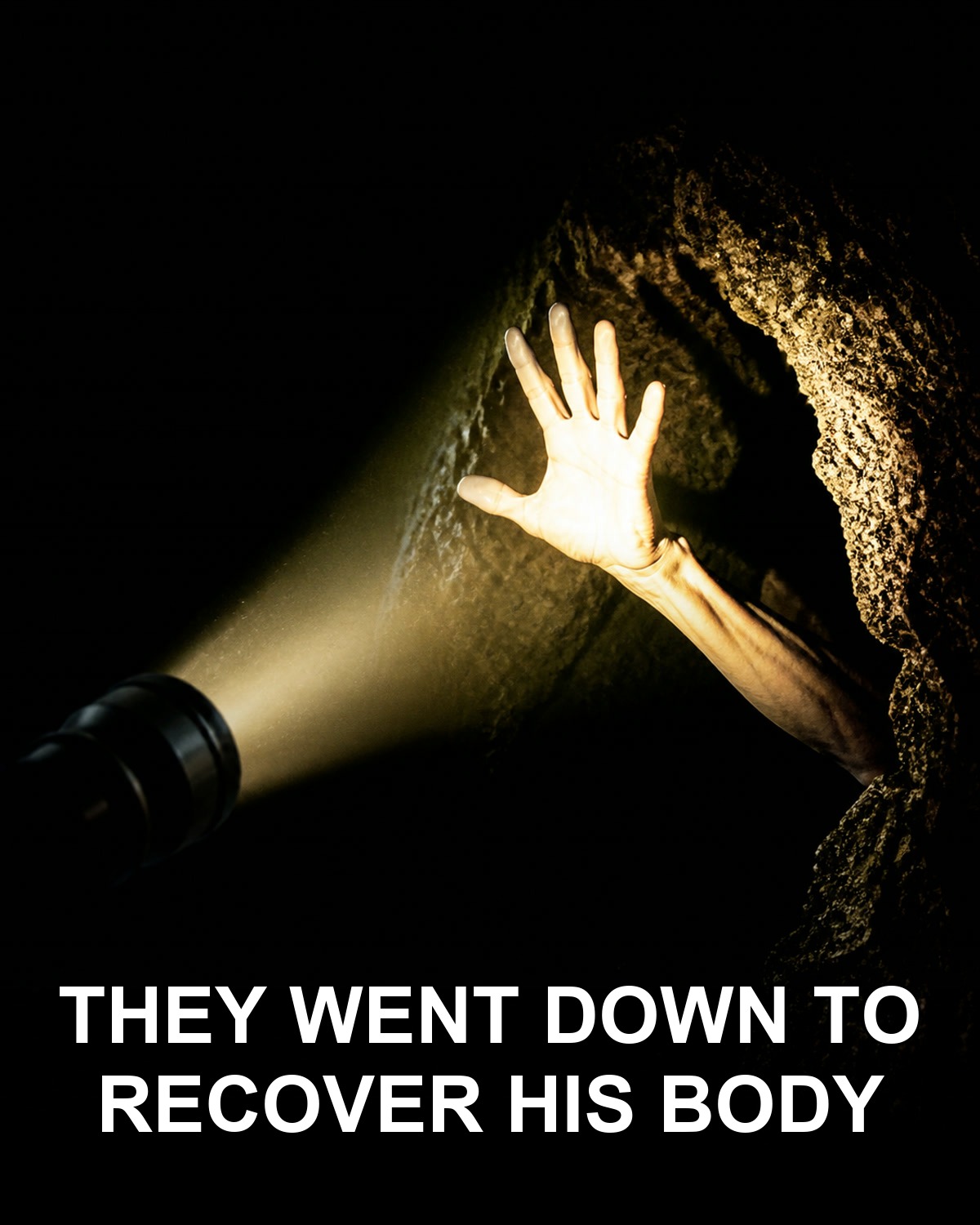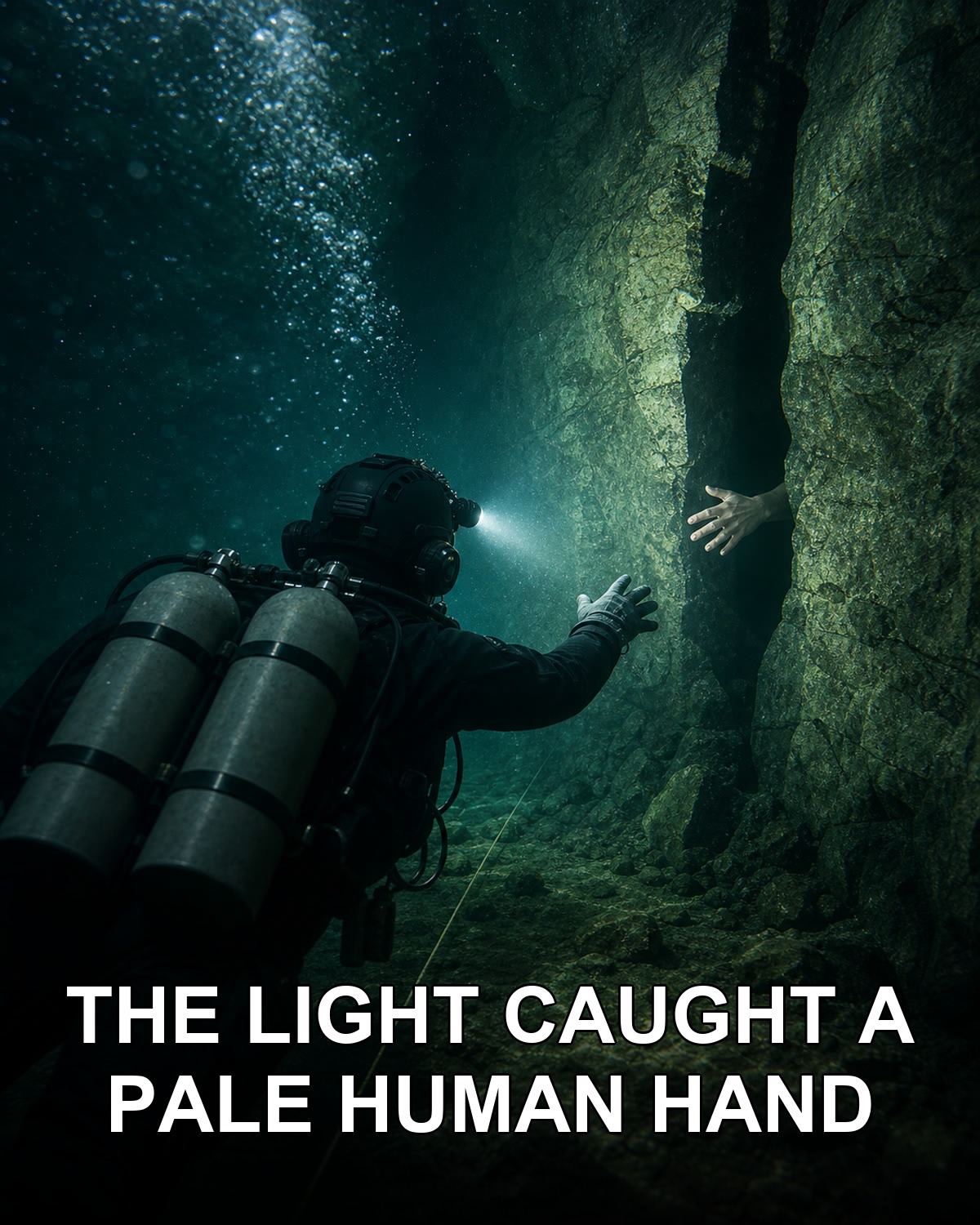
His tenth day of technical diving, and 150 metres
Two men walked into the water at Dahab's Blue Hole with five cylinders and nothing else. No support diver, no surface marshal, no oxygen, no doctor.
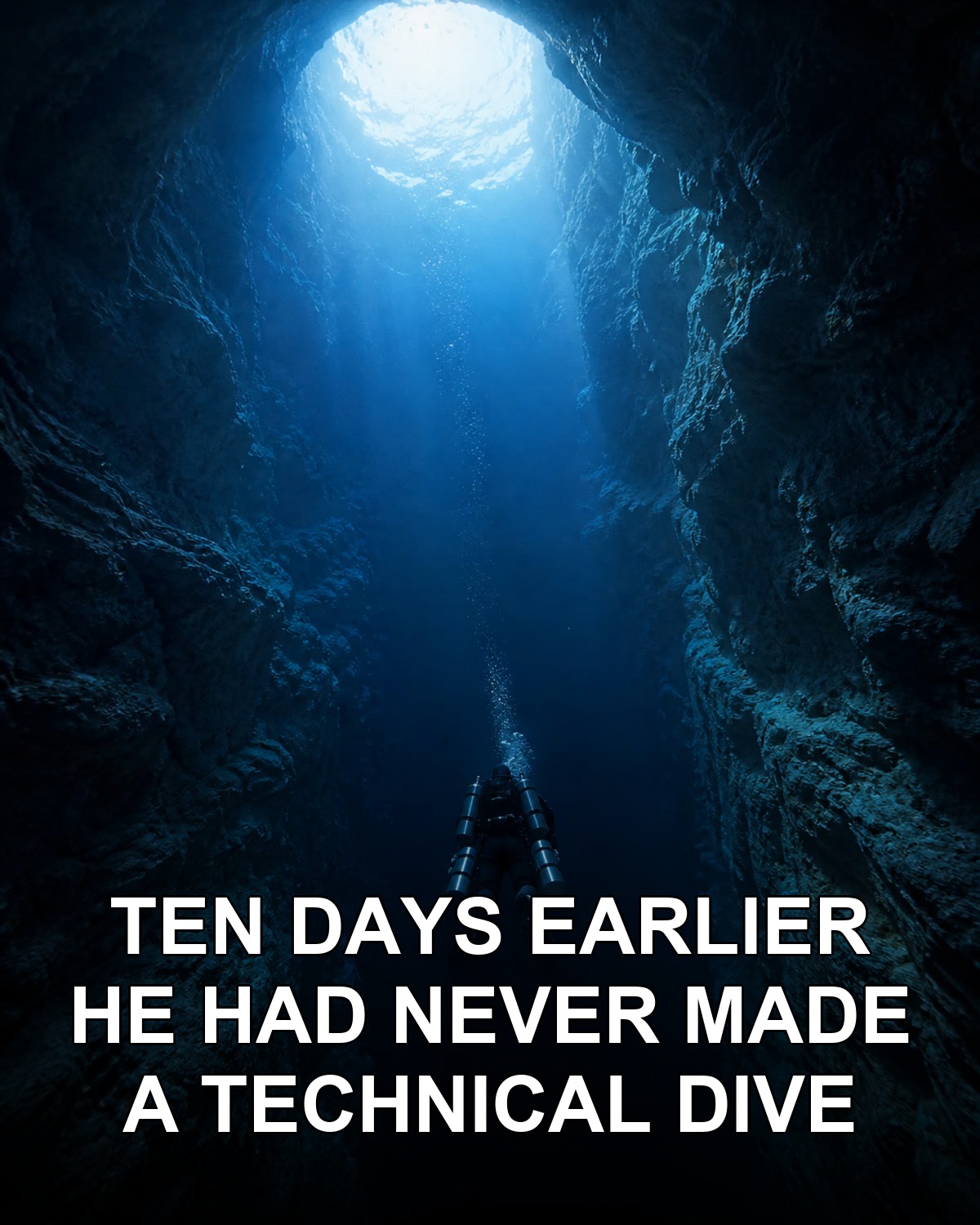
Ten days earlier, Igor Zhalo had never made a technical dive in his life.
The plan that morning was to go to one hundred and fifty metres.
At 8:30 on 7 November 2011, two men walked into the water at the Blue Hole. The first was an instructor. The second, thirty-four years old, was Zhalo, from Moscow.
They carried five cylinders between them. They carried nothing else. No support diver waiting at the mid-water stops. No surface marshal. No emergency oxygen set out on the shore rocks. No ambulance. No doctor.
The Blue Hole lies about ten kilometres north of the town of Dahab, right beside the coast road. From the shore it is only a ring of dark blue water set into the reef, a few dozen metres across, as flat as a well someone had cut into the sea. It is more than a hundred metres deep.
What makes it different from other wells is that it is not sealed. At around fifty-five metres, on the seaward wall, there is an opening. Divers call it the Arch: a tunnel through the reef, twenty-six metres long. Swim its length and you are out in open sea. And immediately beyond the far side of it, the seabed drops away past a thousand metres.
That is the entire problem. Inside the well, the bottom sits at about a hundred metres — if something goes wrong, there is still a floor. Out past the Arch there is no floor at all. Only water, and blue going steadily darker, on down.
On the shore rocks, people have put up memorial plaques. At first there were a few. Then there was a row of them, sitting on the hot dry stone, facing the water — some hand-carved slabs, some only small plates with lettering bleached out by sun and salt. From up there the blue surface lies still, without a ripple.
By 2012, a technical diver living in Dahab estimated that around one hundred and thirty people had died at the site over the preceding fifteen years. Some sources put the real figure closer to two hundred.
More than eight a year, on average.
Nobody can count it exactly, because not everyone is found.
Igor Yuryevich Zhalo was born on 21 December 1976.
He was not an outsider to diving. In PADI's records he was an IDC Staff Instructor — an instructor qualified to help train other instructors — and an Instructor Trainer in emergency first response, number 257929.
His logbook recorded 386 dives, the last on 21 July 2011. All 386 were recreational dives, and his familiar working depth was around fifty metres.
In technical diving — diving with decompression, with mixed gas, with a planned schedule of stops on the way up — his qualifications numbered exactly zero. Not one certification.
At the end of October 2011, he flew to Dahab with a goal: within one week, to cover the whole distance from knowing nothing about technical diving to a trimix certification, and to pick up a technical instructor rating on the way.
In the trade, that road normally takes several months. People who do it carefully take two or three years. Igor Zhalo intended to do it in seven days.
He found someone willing to teach him: Sergey Dunaev, a PADI Course Director who also held a Tec Trainer rating. Dunaev said of himself that he had been to a hundred and seventy metres, but produced no data to support it. His experience of teaching technical diving amounted to about a year.
There is one thing people in the trade in Dahab said afterwards, over and over: his prices were cheap, and he was easy to talk round.
Igor Zhalo's training schedule, day by day:
29 and 30 October, four first dives at Lighthouse — the training site in the town itself. Fifteen to twenty metres.
31 October and 1 November, four more. Forty metres. Then fifty.
From 2 to 6 November, six more, part training and part examination, at depths climbing from fifty-five metres to a hundred and six. Some at the Blue Hole itself, some at Neptune's Cave.
On 4 November he went to sixty-five metres. Back on the surface, he began to get a headache, severe enough that he had to take medication for it.
On 5 November he failed the theory exam. In his diary he wrote that the fault lay with his instructor. That same day, he went to eighty-five metres.
A day later, he was allowed to go to a hundred and six.
From sixty-five metres to a hundred and six in forty-eight hours, with a failed exam and a headache requiring medication in between. No technical diving syllabus anywhere in the world permits that rate.
On 6 November he retook the theory exam. This time he scored above ninety per cent.
On 7 November, he asked to go to a hundred and fifty metres.
As of that morning, the total number of technical dives in his life was fourteen. Of those fourteen, only seven had actually involved decompression.
The 150-metre dive would be number fifteen.
There is one part of this story that nobody has ever untangled cleanly.
According to Sergey Dunaev's account after the accident, the 150-metre dive was originally his own. He had intended to do it alone. Igor Zhalo found out and asked to come. Dunaev refused, Igor pressed him, and in the end Dunaev agreed.
One man willing to think it. One man willing to nod.
Igor Zhalo paid two hundred and fifty euros for that dive. A properly organised 150-metre dive in Dahab at that time cost eight hundred to a thousand euros. The difference was not somebody's profit margin. It was the list of things that had been cut: reserve gas, support divers, a vehicle standing by on shore, medical oxygen, a plan for getting a casualty to a recompression chamber.
Igor Zhalo did write out a dive plan by hand for a hundred and fifty metres. When he went into the water, he used something else.
The written plan specified five gases: Tx9/66, Tx14/49, Tx20/25, EANx32 and EANx60. What he actually carried differed both in configuration and in reserve volume, and it differed on the thin side of the safety standard. One detail in it makes every technical diver who reads the file stop for a long moment: his final decompression gas was not pure oxygen but an EANx60 mix. For a dive from that depth, that is support so thin as to be barely there at all.
And one more. As he entered the water, the pressure gauge on his main cylinder read 200 bar. By the plan, the figure should have been 228. Twenty-eight bar were gone before the dive had even started.
He either did not see it, or saw it and let it go.
Half past eight. The two men entered the water at the rim of the well and descended along the inner wall. The water in the Blue Hole is clear; visibility there is usually over thirty metres.
The sun was already up. The light came down in tilted, trembling bands across the coral wall, and the deeper they went the denser the blue became — warm, easy, nothing in it that reads as warning. On their left, the shaft of the well opened out into empty space, darkening steadily until it went black.
At about fifty-two metres — a little below the roof of the Arch at around fifty-five — they passed the Arch. Igor Zhalo turned to his instructor and put thumb and forefinger together into a circle.
OK.
They went through the Arch, out into open sea, and continued down.
At 8:48, Igor Zhalo switched to his bottom gas and carried on. By this stretch the first signs were already there: hand signals slowing, attention thinning out. The instructor saw it and shone his light on him to bring him back.
At 8:52, the two men reached a hundred and fifty metres. Twenty-two minutes had passed since they left the surface.
The pressure in Igor Zhalo's main cylinder now read 18 bar.
At that depth, eighteen bar is not a portion of gas. It is a few minutes.
Down there the sunlight is gone. The water around them was a bottomless blue-black — no floor, no wall, no reference for the eye to hold on to. Only two beams of light, and the cold pressing in from every direction at once.
By the plan, on reaching the bottom his remaining gas should have been enough to bring him back up to the ninety-metre mark. It was not enough.
Igor Zhalo signalled his instructor: out of gas, must go up.
Then he began to shake. His whole body.
The instructor reached out to hold him. Igor Zhalo switched to another cylinder, pushed the hand away, and swam off.
That is Sergey Dunaev's account. At first he said that he himself had ordered his student up ahead of him. After being challenged, he changed it: Igor pushed him away and bolted, and he did not follow because he could no longer see him. In water with thirty metres of visibility, that is a hard thing for people to believe.
By the book, the two of them should have gone straight up along the outer wall of the Blue Hole, holding each decompression stop on the schedule.
Igor Zhalo did not go up. He swam at an angle — back in towards the inside of the well. Nobody knows for certain why. He may, in the grip of narcosis, have mistaken the lit patch at the Arch for the surface. Or he may simply have wanted to go back towards what was familiar.
Sergey Dunaev did not follow. He stayed on the outer wall and began his own decompression, exactly as originally planned.
From there, everything happened inside six minutes.
Igor Zhalo ascended at roughly twenty-five metres a minute. A safe rate is nine metres a minute.
At around eighty metres he changed gas once more. At sixty metres was the first decompression stop in the plan; he did not stop. At 8:59 he passed the level of the Arch at fifty-two metres and kept going up.
By this stretch, the first symptoms of decompression sickness had appeared: joint pain, difficulty breathing.
Then he met someone.
On the inner wall of the well, another diver saw him, saw that he was swimming unsteadily, and signalled the question: are you all right?
Igor Zhalo put thumb and forefinger together into a circle.
OK.
Then he carried on upward.
Other divers saw him too in that stretch. He asked none of them for help.
That is the detail that stayed longest in the minds of the people who were there that day. He passed help by, at least once and possibly several times — and each time, what he offered was that same small circle made of two fingers.
The judgement afterwards was that by then he was no longer lucid enough to understand where he was.
The water brightened around him as he rose. The wall of the well came back into focus, covered in coral. Above, the surface had become a bright shimmering ring. The place has never looked gentler than it did at that moment.
The last decompression stops, he skipped every one. The dive computer data recorded it: in six minutes he went from a hundred and fifty metres to the surface.
Onshore, it was still an ordinary Dahab morning. Glare on the stone, a couple of cafés with cushions laid out near the edge, the sea flat.
The people standing on the shore rocks saw him surface. He was no longer breathing on his own.
It is likely that he had been unconscious from around twenty metres, and that what carried him up the last of it was only the inflated buoyancy jacket he was wearing.
They pulled him in at once. A freediver and a diver on a single cylinder brought him ashore. A woman diver who was there, Yevgeniya Peskova, began chest compressions. Someone ran to fetch an oxygen cylinder from a nearby shop.
His cylinders were checked: main cylinder 0, stage cylinder 0.
At the Blue Hole that morning there was no medical oxygen, no recompression chamber, nothing. Everything that happened on those rocks was a few strangers' hands and one borrowed bottle of oxygen.
By the time the ambulance arrived, Igor Zhalo had no vital signs. The medical conclusion was fulminant decompression sickness leading to multi-organ failure.
About two hours later, Sergey Dunaev completed his own decompression and surfaced. He swam from the saddle out at sea back around into the Blue Hole, then in to shore.
It was only when he stepped onto the rocks that he learned his student had died two hours earlier.
Afterwards, the one object that should have answered every question — Igor Zhalo's dive computer, holding every metre of depth, every second, every gas switch — was retained by the Egyptian authorities. The Russian technical diving community never saw the full data in it.
So the last question is still open today: before he panicked, had something else already gone wrong inside his body — inner-ear decompression sickness, oxygen toxicity, or simply narcosis plus an empty cylinder.
What is known for certain is three numbers: ten days, fourteen technical dives, one hundred and fifty metres.
WHY THIS HAPPENED
1. Why the Blue Hole is called a divers' cemetery
The Blue Hole is not the deepest site in the world. It is not cold, not dark, and it has no fierce current. It kills people with exactly the gentleness of its appearance.
You wade in from the rocks and you are there. The water is warm. Visibility is over thirty metres. There is no sensation of danger for the body to react to.
A great many people have died here for the same reason: they meant to pass through the Arch, but at that depth the mind has already dulled, and they swim below the mouth of the tunnel while still believing they are on track. The harder they look for the way out, the deeper they go.
Igor Zhalo's case is a variant of the same trap, only inverted: he did not get lost downwards. He got lost upwards.
2. Nitrogen narcosis: why it kills people who feel fine
The deeper you go, the greater the pressure, and the more nitrogen dissolves into the blood. From around thirty metres down, nitrogen begins to act on the nervous system rather like a mild anaesthetic. Divers call it the rapture of the deep.
The dangerous thing about it is not that it hurts or frightens you. Quite the opposite. It makes people feel comfortable, confident, slow and calm. Reflexes slow down. The ability to do arithmetic disappears. The sense of time distorts. And a narcotised diver does not know he is narcotised — that is the whole problem.
At a hundred and fifty metres the effect is very strong. It explains how a man out of gas, in an emergency, could be asked "are you all right?" by another diver and answer "OK" — and go on passing help by like that, again and again, with the same gesture of the fingers. He was not lying. At that moment he genuinely felt fine.
It is also the reason trimix — a mix that replaces some of the nitrogen with helium — is required for any deep dive. Not to stay down longer. To keep the head clear.
3. Why going up fast kills you
Throughout the time spent at depth, nitrogen soaks into the blood and tissues under high pressure. At a hundred and fifty metres the pressure is sixteen atmospheres — sixteen times what it is on shore. As long as the pressure holds, that gas stays quietly in solution.
Ascend slowly, holding each stop on the decompression schedule, and the body has time to shed it gradually through the lungs.
Ascend in one straight run, dropping from sixteen atmospheres to one in a few minutes, and the nitrogen cannot get out in time. It comes out of solution inside the blood vessels themselves — exactly like a bottle of carbonated water shaken hard and then opened. The bubbles block vessels and compress tissue, and the body fails almost immediately. That is fulminant decompression sickness.
For that form, resuscitation on the shore is close to meaningless. The only thing with a chance is a recompression chamber — putting the patient back under pressure to force the bubbles back into solution, then decompressing slowly. At the Blue Hole that morning there was no chamber, and no plan for getting anyone to one.
4. Why certification is not paperwork
What shocked the technical diving world reading this file was not the figure of a hundred and fifty metres. It was the pace.
A technical certification does not sell depth. It sells time — the time it takes for the survival procedures to become reflex: holding neutral buoyancy, switching to the right gas at the right stop, calculating reserve volume, and above all handling a problem when the mind has already been dulled by narcosis. Those skills do not live in the part of you that understands. They live in the part of your hands that works without thinking, and that part comes only from hours in the water, at depths that increase very slowly.
Igor Zhalo scored above ninety per cent on the theory exam — he understood the material. But when the gauge read 18 bar at a hundred and fifty metres, understanding was no help. That situation needs reflex, and he did not have it yet.
As for the instructor: a real instructor has two jobs, to teach and to put on the brakes. The second is the hard one. Here it was not done — not on shore when he agreed, and not underwater when his student pushed his hand away and left.
Some diving specialists have said that if the instructor had stayed with his student at that moment, Igor Zhalo would most likely not have died.
5. Notes against confusion
The Blue Hole at Dahab has several famous cases that are easily mixed up. This is not the Yuri Lipski case (April 2000, the diver who filmed his own death at around 115 metres), nor the Stephen Keenan case (2017, the Irish freediver who died going to a teammate's aid). This is the case of 7 November 2011.
"150 metres" here is a DEPTH, not a swimming distance. That is unlike the Arch, where the figure of 26 metres is the LENGTH of the tunnel and not a depth.
The death toll figures for the Blue Hole (130 or 200) are estimates from the local diving community, not official statistics. No authority has published a full list.
Sources
- https://www.yumpu.com/de/document/view/11364822/im-knochengarten
- https://abcnews.com/International/visit-worlds-deadliest-dive-site/story?id=16772927
- http://forum.tetis.ru/viewtopic.php?f=17&t=66543
- http://forum.tetis.ru/viewtopic.php?t=66419
- https://baltikadiving.ru/proishestvia/proisshestviya-2011
- https://en.wikipedia.org/wiki/Blue_Hole_(Red_Sea)
AI-generated illustration. Not a photograph of the actual incident.