He threw the food away, then climbed back up for it
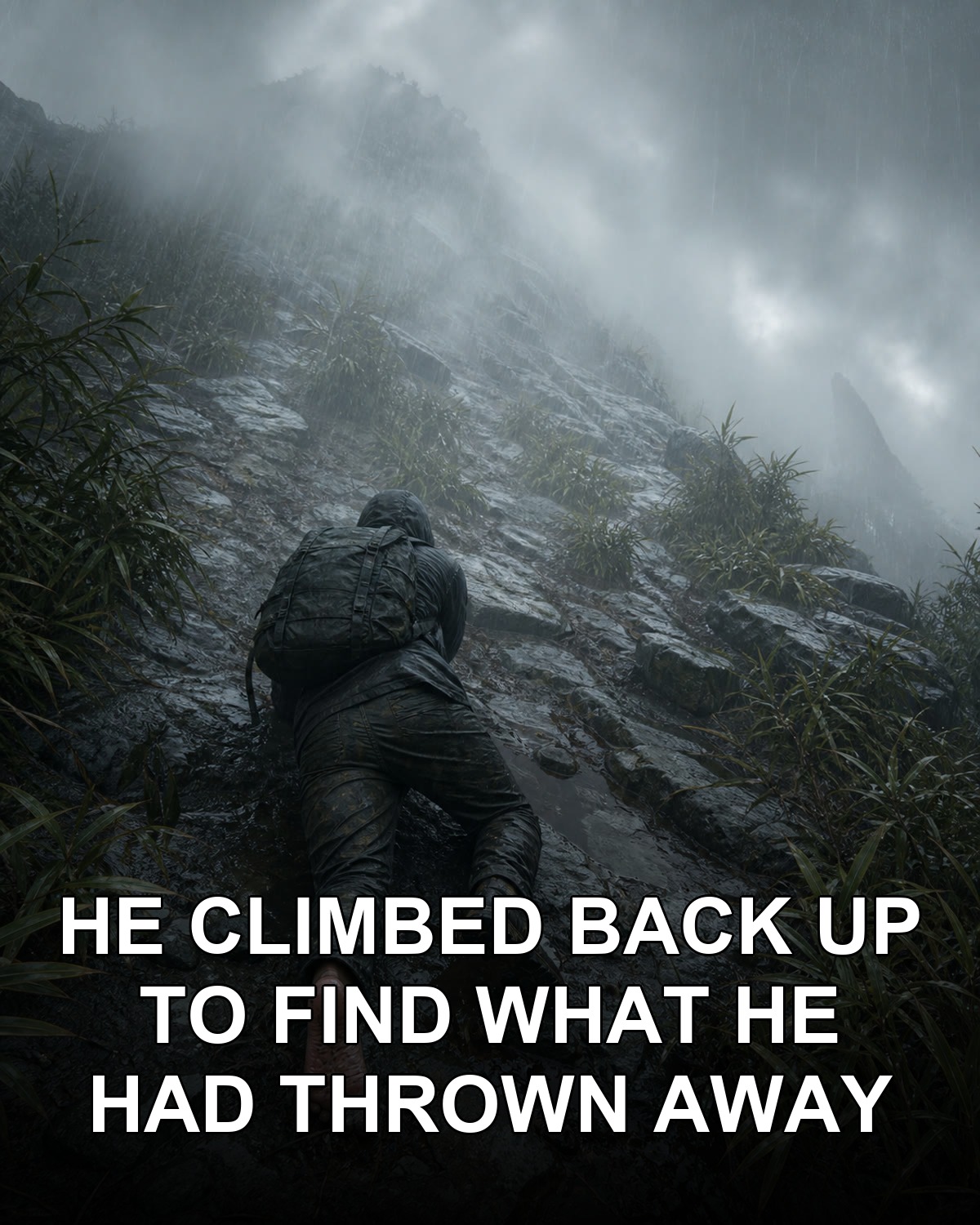
Two broken hands, one bare foot, and the hardest ridge walk in China above him. He turned around and climbed back toward the food he had thrown away.
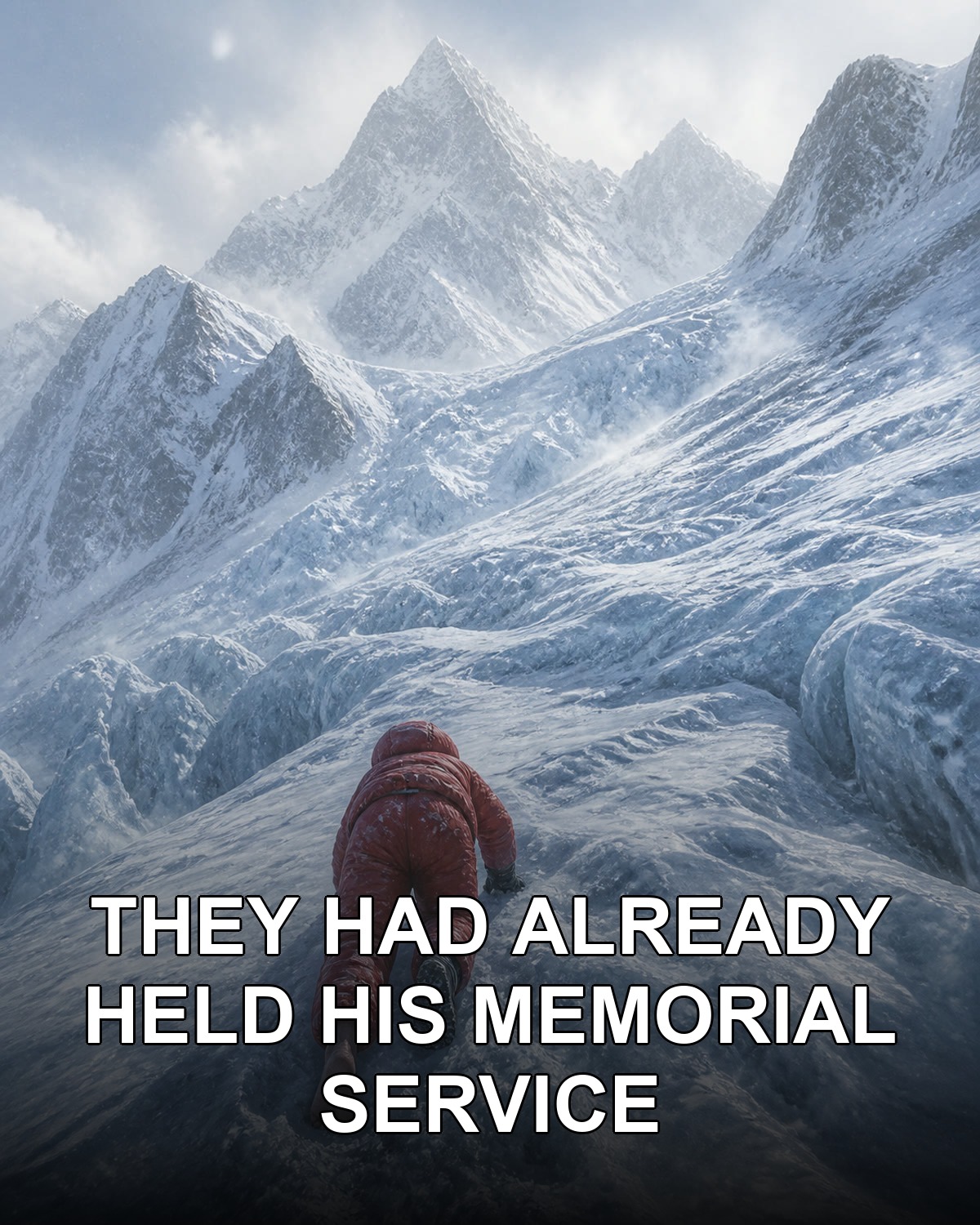
He climbed using two fingers.
His left wrist was broken and the whole hand was immobile. The middle finger of his right hand was broken too. On those two hands, the only things that still moved were the right thumb and index finger. His right foot had no shoe.
It was the morning of 6 October 2021, and he was climbing back up a mountain — back toward the place he had walked away from two days earlier, to look for four compressed ration bars that he himself had thrown on the ground.
The Ao Tai traverse is a stretch of ridgeline in Shaanxi linking the summit of Mount Ao (3,476 m) with Batxiantai on Mount Taibai (about 3,767 m). It is the highest main ridge section in the entire Qinling range.
As the crow flies, the two ends are just over forty kilometres apart. Walked, it is more than one hundred and seventy. A hiker has to cross seventeen peaks above 3,400 metres in succession, through almost entirely uninhabited country, with not a single resupply point along the way.
People in the hiking world call it by another name: the trail with the highest death rate in China.
According to the Ao Tai accident investigation report published in 2018 by the Chinese Mountaineering Association and the Shaanxi Provincial Mountaineering Association, in the five years from 2012 to 2017 alone, 46 people died or went missing on this route.
In October 2017 Taibai County issued a notice of closure. In April 2018 the ban was formalised. Between 2018 and 2022, more than three thousand people appeared on that banned route anyway.
In the small hours of 2 October 2021, one of them shouldered a pack and quietly walked up.
He was a long-distance hiking enthusiast, surname Chen, from Rui'an in Zhejiang province. The Chinese press called him "young Chen" and published neither his full name nor his age.
He was not a novice. He had crossed Wugong Mountain three times, and had carried heavy loads along the Sichuan–Tibet and Xinjiang–Tibet routes. For that year's National Day holiday he planned to walk the whole of Ao Tai in five and a half days. He went alone.
On the evening of the 2nd, the weather around Baoji changed abruptly — the fourth heavy rain of the autumn season, with unusually strong winds on the ridge. He judged it manageable and kept going.
On the afternoon of the 3rd he reached the Shuiwozi campsite. The camp was deserted, litter and abandoned gear scattered across it — thirty hikers had walked off the mountain that morning, worried about the weather.
The ground still held the footprints of those thirty people, all pointing one way: down. Low cloud lay over the ridge. There was only the sound of rain drumming on plastic rubbish.
At around ten at night one more person arrived, a hiker surnamed Mou. The two talked a while and decided to walk together the following day.
At midday on 4 October they set out for Camp 2800 — a rest point and the most important junction on the whole route. The rain and wind were so heavy that it was half past nine at night before they arrived. That night Baoji took another downpour. Nobody slept.
On the morning of the 5th the two men parted. Mou decided to finish the traverse. Chen decided to pull out.
That was the correct decision. The mistake lay in which way he chose to go down.
There are two descents from Camp 2800.
The southern route runs to Hetaoping — gentler gradients, and the way almost every retreating hiker takes.
The northern route drops into the Baiyun gorge — steep, cliff after cliff, sections tilted at seventy or eighty degrees. Very few people use it. On the GPS track map he had downloaded, the northern line was not even included.
He chose it anyway. The reason was simple: the north route came straight out of the mountains. Hetaoping meant walking a further loop before he could get out.
To move light, he did the sums once more: food and water for two days only. He ate all the fruit he had, all the seaweed soup, the vacuum-packed braised meat.
Then he threw away four compressed ration bars, along with the other things he judged he would not need again — among them a power bank that had already gone flat.
At around midday on the 5th he left Camp 2800, followed the ridgeline, and dropped into the Baiyun gorge.
He regretted it very quickly.
Inside the gorge there is no path in any ordinary sense. There is rockfall, vertical wall and fast water. And that is the Baiyun gorge on a dry day. On this one, two straight days of heavy rain had come before. The gorge beds had become flood channels, and every surface was slick as grease.
The noise of water drowned out everything else. He could not hear birds, or his own feet. The walls rose steeply on both sides and little light reached the bottom.
At the third cliff section, he slipped.
He tumbled four times and fell straight down — a vertical drop of about seventy metres, according to press accounts — into the fast water below.
When he came to and dragged himself out of the water, he took stock of what remained.
His head was bleeding and would not stop. His pack — with the tent, the clothing and all the food inside — had been carried away by the water. The shoe was gone from his right foot. His rain shell was torn, effectively useless.
His phone was still on him, battery at about sixty per cent. No signal.
Left wrist broken. Right middle finger broken, bone exposed. On both hands, only the right thumb and index finger still worked.
He bandaged the worst of it roughly, then tried to follow the gorge bed downstream, looking for the pack as he went. At a confluence of streams, the way ahead ended. He went back to the foot of the cliff he had fallen from, and slept his first night there.
On the morning of 6 October, he decided to climb back up to Camp 2800.
The entire reason was four ration bars. With food he could change direction with confidence and go down the southern route.
Both hands were all but unusable. One foot had no shoe. The whole way was uphill.
He reached the camp as the light was going.
Camp 2800 was full of rubbish — above all the gas canisters people had used and left behind. The power bank he had discarded was lying exactly where he had dropped it.
The four ration bars were the only thing gone.
He stood there a while. The wind moved through the scattered canister shells, and there was not a human sound on the whole ridge. The dead power bank was still in its place. The thing he had climbed all day for was not.
He searched the camp thoroughly. In the end he found an empty water bottle and a pair of disposable slippers. The slippers disintegrated into mud after a few steps.
He did not stay the night. There was still light, so he set off at once, southward, toward Hetaoping.
(What happened to him from here until he met other people was witnessed by nobody. All of it comes from his own account afterwards.)
The southern route was not easy either. Days of rain had swollen the streambeds; in many places there was nowhere left to put a foot. He lost the route constantly. There were places where a hundred metres in a straight line took him several hours.
But it was not the injuries that troubled him most. It was hunger.
By then he had gone three days without eating. He drank stream water to fill his stomach. After a few days it began to react: acid reflux, vomiting. He drank more water to soothe it, and the more he drank the weaker he became.
He understood that he had to eat.
He looked for wild fruit and greens first. Both were scarce. Occasionally he found a piece of fruit already rotting, and it still tasted good to him.
Most of the time he ate leaves. His method of choosing had exactly one rule: if it chewed without bitterness and without astringency, he ate it. What he ate most was bamboo leaves.
In the evenings he used the two fingers that still moved, together with his teeth, to snap bamboo stems, laid them across low trees, spread leaves over the top, and made a rough shelter.
Leaves got tiresome. He tried grasses, and several kinds of insect he could not name — a few attempts, and not once could he get one down.
Those days were identical. Walk a while, crawl a while, eat whatever could be found, put up another leaf shelter at night. Wet leaves dripped on him until morning; no part of him was ever dry.
Now and then he switched on the phone and tried the emergency number. It never connected.
There was no other thought left in his head but one: live.
On 9 October — the fourth day since the fall — he saw a house.
Inside he found a jar of fermented bean curd, two years past its date. A little dried paste still clung to the inside of the glass. He caught rainwater, poured it in, shook it until the paste dissolved, and drank. The liquid was cloudy and gritty, salty and harsh. He drank all of it.
It was the first thing with any flavour to enter his mouth in four days.
Beside the house were empty flour sacks. He tore them open and put them on — another layer of warmth, and later something to keep the rain off.
That night he laid down cardboard found inside and slept on it. It was the best sleep he had had in many days: at least he was off the wet ground and out of the wind.
For the next few days he stayed near the house by day, gathering wild walnuts and greens, and slept inside at night, meaning to wait for the streams to drop and for his body to recover a little.
While he lay in that abandoned house, elsewhere in the same range, another search was reaching its end.
On 25 September — a week before he walked up — three hikers had started the Ao Tai traverse. On 27 September one of them, a man surnamed Wu, fifty-three, from Zhengzhou in Henan province, developed leg pain and became separated from the other two near Camp 2800. They walked down and called for help. When they returned with local people, he was gone.
On 2 October, Wu's family made a formal appeal for help. From 8 to 11 October, a team of twelve searched for four days in rain, snow and ice.
At five in the afternoon on 10 October they found him, on a gentle slope about a hundred metres below the Nantianmen area, near a boulder.
His outer jacket had been taken off and laid beside him. He wore only a thin layer.
That place is bare ridge: no trees, no wall to break anything. The jacket lay next to him, neatly folded, as though he had taken it off because he felt hot.
That is the classic sign of terminal hypothermia: when core temperature falls far enough, the nervous system misreads sensation and the person feels hot — so they undress.
The cause of death was determined to be hypothermia.
It was that death that brought people to the living man.
On 12 October a group walked up from Hetaoping by the southern route. They were not looking for anybody. They had come to bury the body of the man who had died.
At the abandoned house, they met someone. He could still walk, and his condition was not as bad as his appearance suggested, but one look told them he had been suffering for many days.
The group still had their own work higher up. They told him to wait. Before leaving they gave him a lighter, several packets of instant noodles, some sausages and some steamed buns.
Not much. But more than enough to hold him until they came back down.
That night he got a fire going. The flames threw a ring of yellow onto the wall of the house, and beyond it the forest stayed black. Heat pressed against his face while his back stayed cold. Steam came off his clothes.
It was seven days since he had last been warm.
And one thing surprised even him: with real food in his hands, he found he could not eat it. It took repeated attempts before he managed half a sausage and half a bun.
Also on 12 October, that group brought him off the mountain. Counting the day he fell and the day he was brought out, it was eight days. That was how his five-and-a-half-day trip ended.
He returned to Zhejiang, spent a period in treatment, and gradually recovered. In an interview he said he no longer wanted to "wander" like that; he wanted to live a little more settled. As for hobbies, he said that in future he wanted to ride a motorcycle.
The same range, the same first ten days of that October, two men in trouble. One died. One walked out. The difference came neither from fitness nor from experience. It lay in things so small that at the moment of deciding, nobody sees them as important.
The chain of three decisions that led to the fall
It was not inexperience. Three crossings of Wugong Mountain, the Sichuan–Tibet route, the Xinjiang–Tibet route — he had more experience than most of the people who have died on Ao Tai. It happened because of three small decisions stacked on one another, each of which, taken alone, sounds entirely reasonable.
First: going alone onto a banned route in the middle of a heavy rain event. Thirty people at Shuiwozi had already walked down because of the weather. He kept going.
Second: choosing the shorter way out — a way that was not on his own track map.
Third, and the most expensive: shedding food to save weight. Those four ration bars weighed a few hundred grams. He threw them away on the calculation that two days would see him out of the mountains.
He was in the mountains for another eight.
The three things that kept him
Three things, and not one of them is pure luck.
First, he fell into water rather than onto rock. The fast water took his pack, but the same water broke his fall. This is the only part that is genuinely luck.
Second, and this is the pivot: he ended up low. Wu died of hypothermia near Nantianmen, high on the open ridge, where there was sleet and ice. Chen fell into a gorge lower down — trees, water, bamboo leaves to eat, and above all considerably warmer than the ridge. The same range, the same days, two men at two altitudes, and the altitude decided who lived.
Third, he did not lie down and wait. Across all eight days he never stopped working: crawling after the pack, climbing back for the ration bars, bandaging himself, testing leaves by his own rule, building a leaf shelter every evening to get off the wet ground, switching the phone on once a day to try a call.
Getting off the wet ground sounds small, but in damp mountain country, lying directly on soaked earth all night is the shortest path to hypothermia. He had, on his own, avoided precisely the thing that killed the other man.
One note, because this is where the story is most often told wrong.
The figure "2800" in the name Camp 2800 is an altitude in metres — not a camp number. And the "seventy metres" of the fall is the vertical drop as reported in the press, not the height of the cliff he slipped off: he tumbled four times down the slope before he dropped into the water.
As for the two men in this account — Wu, who died on the ridge, and Chen, who was walked out of the forest — they did not know each other, did not travel together, were not in the same party, and probably never met.
Except for this: if Wu had not died at Nantianmen, nobody would have climbed the southern route on 12 October that year.
Sources
- https://www.163.com/dy/article/KFCTKROR0540RMZ3.html
- https://www.thepaper.cn/newsDetail_forward_14880625
- https://zh.wikipedia.org/zh-cn/鳌太线
- https://m.gmw.cn/2025-02/21/content_1303976963.htm
- https://caa1993.org.cn/content/86/2827.shtml
- https://www.bjnews.com.cn/detail/1721054442168460.html
AI-generated illustration. Not a photograph of the actual incident.