I Raised Her Nephew for Four Years While She Sent Eight Cards — Then She Stood Up in Court and Told a Room Full of People I Only Did It for the Money
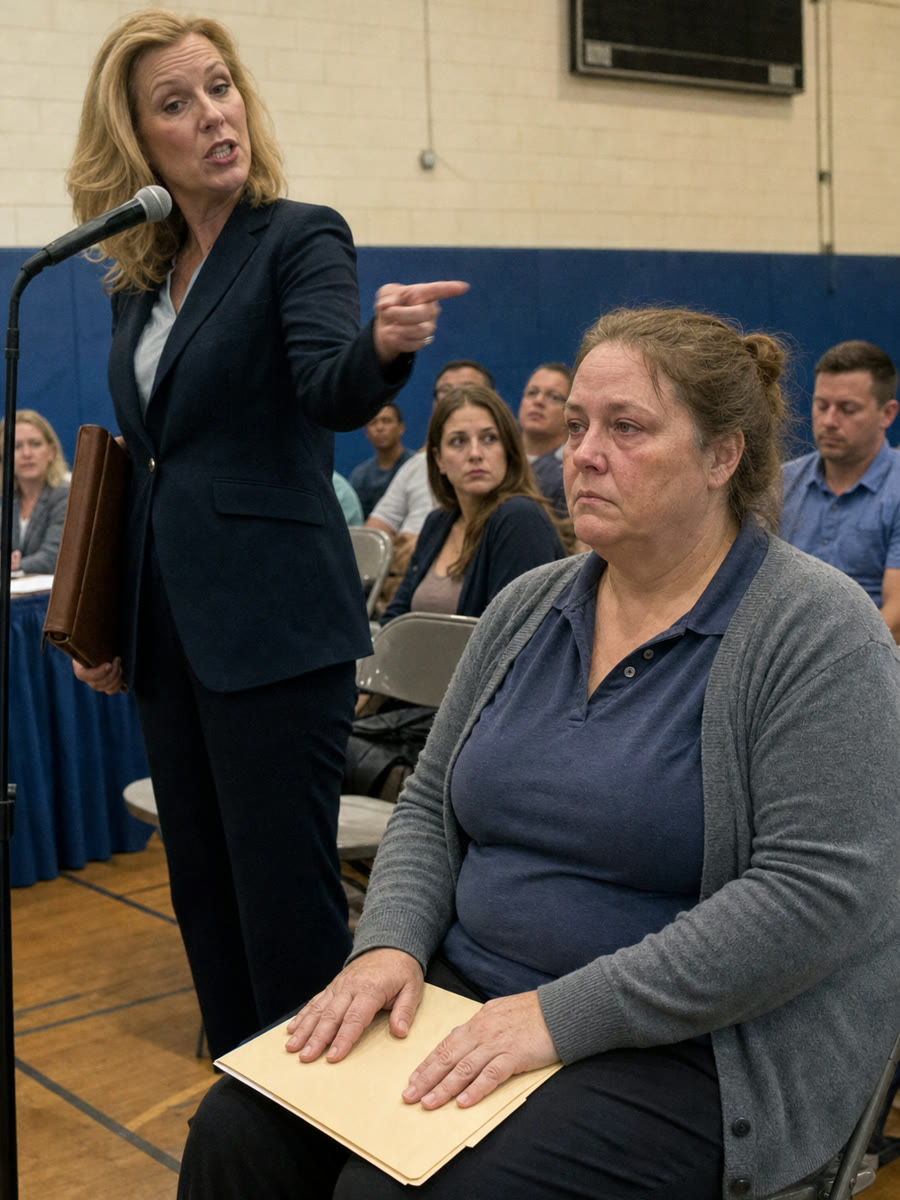
"Everybody knows why people take these kids in. It's eight hundred dollars a month. Blood is the only thing that's real."
"Ma'am, you'll want to sit down."
"I'll sit when somebody in this room says the quiet part out loud. I'm his aunt. I'm his mother's sister. I don't think I need a chair to say that."
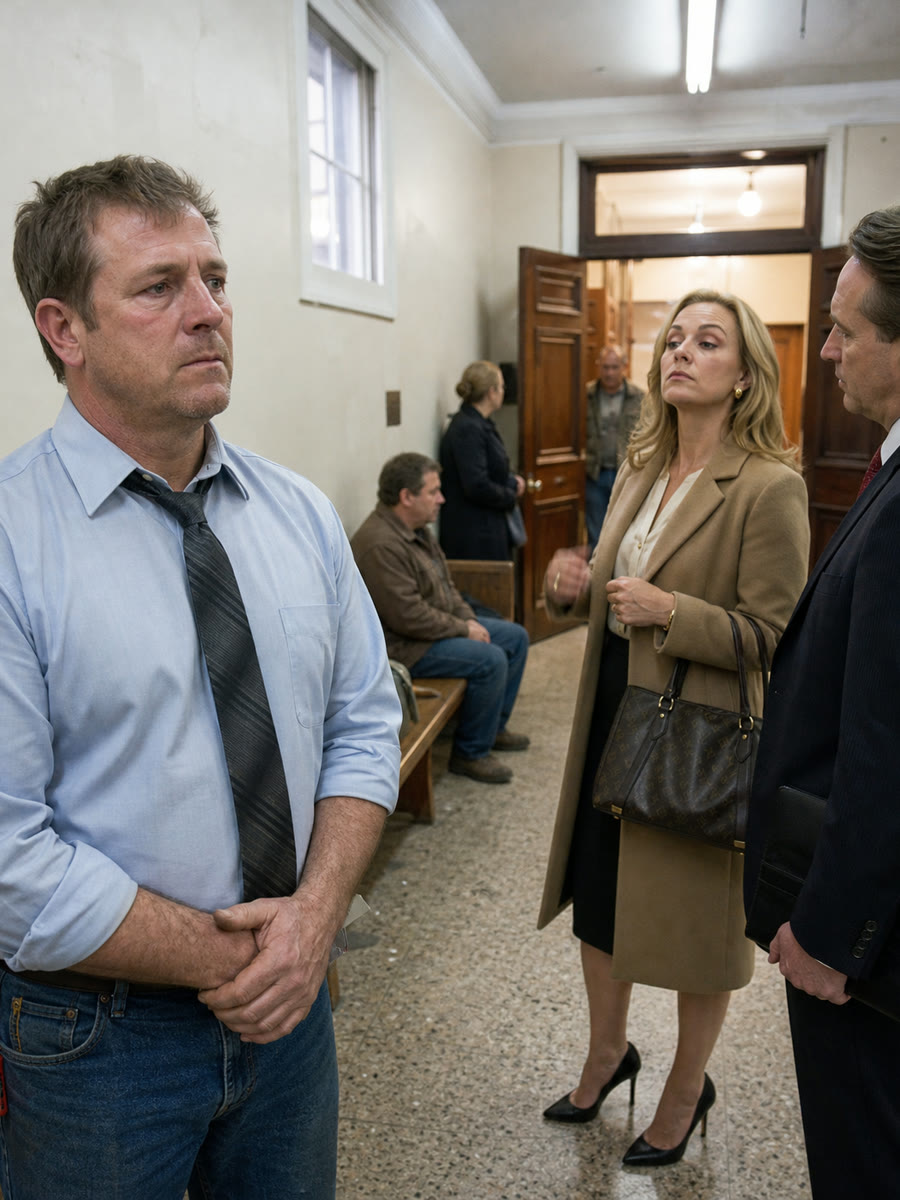
There were maybe twenty people in that hallway and courtroom between the two of us, and every one of them heard it, and I know that because the sound of a room deciding not to look at you is a sound.
I looked at my boots.
They're steel toe, and the left one has a burn across the top from a panel that arced on me in February, and I looked at that burn for about four seconds.
"Mr. Halvorsen."
"Yes, ma'am."
"Do you want to respond to that?"
"No, ma'am."
"You're entitled to."
"I know."
Milo was sitting on the bench outside the doors with his backpack across his knees, and the doors were open, and that's the only part of the whole morning I'd change if somebody let me change one thing.
I got up and went out and pulled the doors mostly shut behind me.
"You hungry?"
"No."
"There's a machine down by the elevators."
"I'm not hungry."
"I know. I'm asking if you want something anyway."
"What's in it?"
"Chips. Those orange crackers with the peanut butter."
"The orange crackers are okay."
"That's a yes."
"That's a maybe."
I got him the orange crackers. He set the pack flat on his knee and lined the edge up with the edge of the backpack, and I sat down next to him.
"Is she going to come out here?"
"Probably not."
"Does she know I'm out here?"
"I don't know what she knows."
He opened the crackers, ate one, put the rest back in the sleeve and folded the sleeve over twice.
That's how I know he's scared. He rations.
Four years and he still rations, and I have never once run out of food in that house.
I should say what this was.
It was a Tuesday morning in October, and it was supposed to be the last morning. The last morning of forty-eight months of it. Adoption finalization, ten o'clock, the small courtroom on the second floor, the one with the wood that isn't real wood.
Nine days before that Tuesday, Dana Prewitt filed a petition for custody of her nephew.
"You could have told me," I said to Alonzo in the parking lot that first day.
"I told you the day it hit my desk."
"I mean before."
"Russ, I didn't know before. She filed with the clerk. Nobody calls me first."
"Four years and nine days."
"I know how long it's been. I've been the caseworker for three of them."
Alonzo Reyes is thirty-something with a bad haircut and a car full of file boxes and he has never once lied to me, including the times a lie would have been kinder.
"What happens now?"
"Now the judge hears both, same day. Judge Okonkwo doesn't like leaving a kid hanging between two dates."
"My finalization and her petition. Same morning."
"Same morning."
"That's a hell of a morning."
"It is."
"Do I need a lawyer?"
"You have one. The county gave you one. Whether you need a better one, I'm not allowed to answer."
"That's an answer."
"That's not an answer."
"Alonzo."
"Russ, get some sleep. You look like a man who's been up on a ladder since Thursday."
"I have been up on a ladder since Thursday."
"That's what I said."
I run wire. Residential mostly, old houses in the north end where somebody in 1958 decided two outlets per room was plenty. I'm forty-seven, never married, and it's enough for a two-bedroom with a carport and a kid who eats like a fire.
*
The first time I saw Milo he was eight, standing in the doorway of a room at the county office with his hand flat on the frame.
"He doesn't talk," the woman said. "Not to me, not to the last placement, not to the school. He's not deaf. He's been checked. It's a lot for a first placement. He's had three homes in fourteen months."
"Three."
"Three."
"That's a lot of hallways."
She looked at me.
"That's a strange way to put it."
"It's a lot of learning where the bathroom is."
He didn't talk for five months and eleven days.
I'm not going to pretend I handled it well. I read one book about it and I didn't finish the book. What I did was I talked. Out loud, at a normal volume, about nothing, all day.
"That's a breaker box. It's from the fifties. Whoever wired this had a bad afternoon."
Nothing.
"That's cloth wire. See how it's cracking? That's asbestos on the outside of that one. We don't touch that one."
Nothing.
"You want to hold the light? You don't have to."
He held the light.
That was week three. I handed him the light again the next Saturday and he took it again, and that went on eleven weeks, and then one day I dropped a wire nut into a joist bay and said a word I shouldn't have said in front of a child, and he said:
"It went behind."
That's the first thing Milo ever said to me. Four words, pointing.
"Behind where?"
"Behind the pipe."
"Show me."
He showed me.
I did not make it a big thing. I want that on the record because everybody who hears this story wants me to have cried, and I didn't, and if I had I think he'd have gone quiet for another five months.
I said, "Good eye. Hand me the flashlight."
*
"Mr. Halvorsen, this is Ms. Ferrante. She's the guardian ad litem the court appointed for Milo."
"The what?"
"Guardian ad litem. I represent his interests to the court. Not yours, not the agency's. His."
"You a lawyer?"
"I am."
"Who pays you?"
"The court."
"So you work for the judge."
"I work for the court. It means nobody in this case is my client except a twelve-year-old, and if what he needs is inconvenient for every adult in the room, that's not my problem."
"I had a picture of somebody from the county with a clipboard."
"I do have a clipboard. Mr. Halvorsen, I'd like to talk to Milo alone. Multiple times. At his school, at your home, and once somewhere neither of you picked."
"He likes the hardware store."
"That's loaded. That's yours."
"Fair."
"There's a diner by the county building. I'll take him for pancakes and he'll be back in an hour."
"He doesn't eat in front of people he doesn't know."
"Then he'll sit in front of pancakes for an hour and I'll learn something from that too."
She was maybe fifty-five with reading glasses pushed up in gray hair, and she carried a canvas bag instead of a briefcase, and she wrote in pencil.
"One more thing. I'm going to ask you things that are going to feel like accusations. They're not. They're the same questions I ask everybody. If you get defensive with me, you're going to get defensive with the judge, and the judge has forty minutes and I have four months."
"Understood."
"Do you receive a foster care maintenance payment?"
"Yes."
"How much."
"Twenty-seven forty a day."
"That's a precise number."
"It's on the notice. It comes on a notice."
"Do you know what it works out to monthly?"
"Eight hundred and twenty-two on a thirty-day month. Eight forty-nine forty on a thirty-one."
"You've done the math."
"I do the math every month, because it doesn't come on the first, it comes on the ninth, and rent's on the first."
She wrote something in pencil.
"Do you have any idea what your kid costs?"
"Yes, ma'am."
"Tell me."
"He eats about two hundred a month and that's if I cook, which I do. School lunch is four fifteen a day but he gets reduced so it's forty cents. Shoes are ninety and he goes through them in five months, which everybody tells me is normal and I don't believe. Bus is nothing, we're in district. Winter coat was a hundred and ten last year and I bought it a size up so it's got one more year in it."
"Keep going."
"Dentist. Two teeth came in behind the other ones. Eleven hundred over eight months. Medicaid covered most of it, not the retainer. Retainer's a hundred and ninety a month for eleven months and there's four left, and the card's still not paid off."
"You know all these numbers."
"I've got a notebook in the truck. Every month. I don't spend the payment on anything except him, and I keep the receipts, and the reason isn't for you, it's because—"
I stopped.
"Because what."
"Because somebody's going to say it eventually."
"Say what."
"That I'm in it for the money."
Ms. Ferrante did not write that down.
"Mr. Halvorsen, I've been doing this eighteen years. Tell me what you think that payment is."
"It's not a paycheck. It's a reimbursement. Food, clothes, a roof, day-to-day supervision, school supplies, his own small stuff, getting him where he needs to go. That's what's on the sheet."
"That's what's on the sheet."
"It's not income. It's not even taxed."
"Correct. It's excluded."
"So I don't put it on a return and I don't get to call it earnings, and the first time somebody says the word wage about it I'm going to have a long day."
"You're going to have a long day."
"Because somebody's going to say it."
"Somebody always says it."
*
Dana Prewitt came to the house once before the hearing. One time. Nine days out, four days after she filed.
She has a good car. I noticed it because it was in my carport and it did not look like it belonged in my carport.
"Russell?"
"Russ."
"Dana Prewitt. I'm Kayla's sister."
"I know who you are."
"You do?"
"There's a picture on his dresser."
That landed somewhere. I watched it land.
"Can I come in?"
"He's at school till three ten."
"That's not what I asked."
"Come in."
She came in and stood in my living room and looked at it the way people look at a room they intend to describe to somebody later.
"It's small."
"It's eleven hundred square feet."
"I have four thousand."
"Congratulations."
"That wasn't a brag."
"It kind of was."
"I'm sorry. I'm nervous."
"Okay."
"Can I see his room?"
"No."
"Excuse me?"
"You can see the living room and the kitchen and the bathroom's down the hall if you need it. His room is his."
"He's twelve."
"He's twelve and it's his room and if he wants to show it to you he can."
"You're being difficult."
"I'm being consistent. Same rule for me. I knock."
"You knock on a twelve-year-old's door."
"Every time."
She sat down on the couch. It's a couch I bought used and it dips on the left, so she sat on the left and went down three inches and pretended she hadn't.
"I want to say something and I want you not to interrupt. My sister died five years ago in August. She was thirty-one. She had a hard life and a lot of it was her own doing and some of it wasn't, and when she died I was in the middle of my own thing and I did not step up. I'm stepping up now."
"Okay."
"That's it? Okay?"
"You told me not to interrupt."
"I'm done."
"Then can I ask a question? Where were you?"
"That's not fair."
"It's a question. You said you didn't step up. I'm asking where you were instead."
"I was going through a divorce. It was ugly. It took two years."
"That's two. It's been five."
"You're counting."
"Ma'am, I've had him forty-eight months. I know exactly how many. I know it the way you know your own kid's birthday."
"He's not your kid."
There it was. First time, in my own living room, on my own dipping couch.
I didn't say anything.
"I'm sorry. That came out—"
"It came out how you meant it."
"No."
"It's all right."
"It is not all right, I—"
"Ms. Prewitt, do you want coffee? I've got the kind in the can."
She looked at me for a while.
"Yes. Please."
I made coffee. She drank about half of it.
"He was quiet as a baby too. Kayla used to say he was the only baby in the world you could take to a movie. She was proud of that. She shouldn't have been proud of that, but she was."
"When did you see him last?"
"What?"
"Him. Milo. When's the last time you were in a room with him."
She set the cup down.
"We've kept in touch."
"That's not what I asked."
"I've always kept in touch. I want that understood."
"Okay."
"Don't say okay like that."
"I said it like a word."
"I've sent things."
"You have."
"You know I've sent things."
"I do know. There's a box."
"A box."
"Bottom of his closet. I don't open it and I don't throw anything away."
She went to the window, which faces the carport and her good car and my truck with the ladder rack.
"He was eight."
"He was."
"Eight is—"
"Eight is old enough to remember."
"What does he remember?"
"That's his to tell."
"You won't even give me that."
"No, ma'am. Not because I'm cruel. Because it's his."
She picked up her purse.
"I'm going forward with it. I want you to know that from me and not from a lawyer."
"I appreciate that."
"You do?"
"I do. It's more than a lot of people would do."
"You're a strange man, Russell."
"Russ."
*
"Russ."
"Yeah."
"Who was here?"
"How do you know somebody was here?"
"There's two cups."
He was standing at the sink with his backpack still on, and he was looking at two mugs in the drainer, and he was twelve.
"Your aunt."
"Dana."
"Dana."
"What did she want?"
I had about a second and a half to decide, and what I decided was the thing I've decided every time, which is that I don't lie to him even when the truth is a bad thing to hand a kid.
"She filed a petition. She wants the court to give her custody of you."
He didn't move.
"Instead of the adoption."
"Instead of."
"So it's not happening."
"It's still happening. Same day. The judge hears both."
"When."
"The twenty-first. Same as it always was."
"Nine days."
"Nine days."
He took his backpack off, finally, and hung his coat on the back of the chair the way he does, and lined up the sleeves.
"Is she nice?"
"She was polite. She was nervous. She said one thing I didn't like and then she apologized for it."
"What thing?"
"That's between me and her."
"That means it was about me."
"It was about me, actually."
"Oh."
He got a glass down and filled it at the tap and didn't drink it.
"Can she do it?"
"She can ask. Asking is allowed. Anybody can ask."
"But can she do it."
"I don't know. I'm not going to tell you I know when I don't."
"Okay."
"Milo."
"What."
"Look at me a second."
He looked at the counter.
"Close enough. Whatever happens on the twenty-first, I'm not going anywhere. If it goes bad, I'm still going to be a guy you can call. I'll drive. I don't care how far."
"That's not the same."
"No. It's not the same."
"So don't say it like it's a good thing."
"I'm not saying it's good. I'm saying it's true."
He went to his room and shut the door, and forty minutes later he came out and did his math homework across from me while I did the invoices, and neither one of us said anything for an hour and a half, and that's the closest thing to a conversation we had about it.
*
"He's been writing," Ms. Ferrante said on the phone, three days out.
"Writing what?"
"That's not a question I'm going to answer."
"Is he okay?"
"He's frightened and he's holding it well and he's twelve, which means holding it well has a shelf life."
"What do I do."
"Nothing different. Don't start being extra nice. Kids read that as a goodbye. Feed him. Make him do his homework. Argue with him about something small."
"Argue with him."
"About screen time or a jacket. Normal house noise. It's the loudest way you can tell a kid nothing's ending."
"That's—"
"That's the whole job, Mr. Halvorsen. One more thing. On the twenty-first, whatever happens, do not raise your voice in that courtroom. Not once. Not even if it's justified."
"I wasn't planning to."
"I'm telling you because I've seen good men lose on tone."
"Understood."
"And Mr. Halvorsen."
"Yeah."
"Does he know how old he is?"
"He's twelve. He turned twelve in March."
"That's not what I asked."
I didn't understand the question then. I understood it later.
*
The twenty-first. Ten o'clock, second floor.
The hallway was full because the hallway is always full, but some of it was for us.
Denise from the school office, who let him eat lunch in her office for two months of fourth grade and never wrote it down. Ruth and Emmett from next door, both in their seventies, who kept him the four times I got called out at night. Two guys off my crew, Sal and a kid named Deshawn, in clean shirts, which for Sal is a formal event.
"You didn't have to come."
"Russ, shut up," Sal said.
"I'm just saying it's a Tuesday."
"It's a Tuesday. We're here. Shut up."
Dana came in at nine fifty with a lawyer in a good suit, wearing something you'd wear to a funeral, and I want to be honest, she looked terrible. Like somebody who hadn't slept in nine days either.
She saw Milo on the bench and she stopped walking.
He looked at her.
She looked at him.
Neither one of them said anything, and she went in.
"That was her," he said.
"That was her."
"She looks like the picture."
"Does she."
"Her face is different but she looks like the picture."
"You want to sit inside or out here?"
"Out here."
"Okay."
"Russ."
"Yeah."
"Is the judge going to talk to me?"
"I don't know. Maybe."
"What do I say?"
"The truth."
"That's what everybody says."
"Because it's the only thing that works in a room like that."
The bailiff came out.
"Halvorsen? They're ready."
*
Judge Okonkwo was a woman about sixty with reading glasses on a chain and a stack of files squared up on the bench.
"We have two matters this morning on the same child and I'm going to take them together for reasons of common sense. Everyone will get to speak. Nobody will speak twice. Mr. Reyes, you're the caseworker?"
"Yes, Your Honor."
"Ms. Ferrante, guardian ad litem?"
"Yes, Your Honor."
"Then let's go. Mr. Reyes, agency position."
"The agency supports the petition to adopt. Four years and nine days. Zero placement disruptions, zero substantiated concerns, school attendance at ninety-eight percent."
"Ninety-eight."
"He's missed nine days in four years, Your Honor. Seven were a dental surgery and recovery. He entered this placement non-verbal by choice. He is not now. Middle band academically, top band in one subject."
"Which subject."
"Math, Your Honor."
"Noted."
Dana's lawyer stood up.
"Your Honor, my client is the child's maternal aunt. She is his only living blood relative on his mother's side other than a grandmother in a memory care facility. She's financially stable, she owns her home, she's married, and there is federal and state preference for placement with kin."
"There's a preference for kin at the time of removal, counsel. We are four years past removal."
"Your Honor, she was not properly notified at the time of removal."
"Mr. Reyes."
"The record shows a diligent relative search, Your Honor. Notice went to the address the agency had. It came back undeliverable."
"Because I had moved," Dana said.
"Ms. Prewitt, your counsel speaks for you."
"I'm sorry, Your Honor."
"It happens in these. Counsel, continue."
"My client's position is simply that a child does better with family. She's prepared to provide a level of material stability that, respectfully, the current placement cannot. Her home has four bedrooms. There's a college fund established. There is a two-parent household."
"And Mr. Halvorsen?"
"Mr. Halvorsen is a single man of forty-seven who works a trade with irregular hours and lives in a two-bedroom rental."
"Is he a bad foster parent, counsel?"
"That is not our position."
"Then what is your position."
"That blood is a factor the court is entitled to weigh."
"It is. Mr. Halvorsen, do you want to say anything?"
I stood up. My lawyer had told me to stay seated but I stood up because I didn't know how else to do it.
"Your Honor, I'm not going to argue against her. She's his family."
"You're not going to argue."
"No, ma'am. I only want to ask the court for one thing."
"One thing."
"Ask him."
"Ask him."
"Ask Milo. He's out in that hallway. He's twelve. Whatever he says, I'll take it. If he says he wants to go with his aunt, I'll drive him myself and I'll help her carry the boxes in."
The room got very quiet.
"That's the entirety of what you want to say."
"Yes, ma'am."
"Sit down, Mr. Halvorsen."
I sat down.
*
And then Dana's lawyer made the mistake, except it wasn't the lawyer. It was Dana.
"Your Honor, if I may address the suggestion that my client has been absent."
"Go ahead."
"My client has maintained continuous contact with her nephew throughout."
"Ms. Prewitt, is that accurate? You may answer that one."
Dana stood up.
"Yes, Your Honor. Every single birthday and every single Christmas. I've never missed one."
"How."
"Cards. Cards and a gift card in each one. Since he was placed."
"How much."
"Fifty dollars each. Always fifty. Two a year."
"So that's—"
"That's four hundred dollars, Your Honor. Over four years. Eight cards. I kept every receipt because I knew somebody would ask."
"Ms. Prewitt."
"Everybody keeps saying I disappeared and I did not disappear. I sent every one."
"Ms. Prewitt, sit down please."
"I want the court to know that."
"The court knows it. Sit down."
She sat down. And her lawyer, who was not a stupid man, put his hand flat on the table and looked at the wood.
Because eight cards is eight cards.
Eight envelopes in four years is not contact. It's postage.
But that's not what killed it. I've told this at two barbecues now and both times somebody said "and that's when she lost it," and no. The court doesn't punish somebody for a bad answer.
What she'd done was something else. She'd told a room full of people, under oath, exactly what she'd sent — and by doing that she'd told them exactly what she hadn't.
"Ms. Ferrante," the judge said. "Guardian ad litem's report."
"Your Honor, I've had this matter four months. I've met with Milo nine times. Four at the home, three at school, twice at a diner on Coleman Street."
"And your recommendation?"
"Before I give it, Your Honor, I'd ask the court's leave to address a threshold matter that I don't believe has been raised this morning."
"What matter."
"The child's age."
"He's twelve."
"He's twelve, Your Honor. He turned twelve on the fourteenth of March."
"I have that."
"Then the court is aware that under our statute, no decree of adoption may be entered for a child who has attained the age of twelve without that child's own consent, given before the court, unless the court makes a specific finding that requiring it would not be in his best interests."
Nobody moved.
"That's not a preference of the parties," Ms. Ferrante said. "It's not the agency's, it's not Mr. Halvorsen's, and it is not Ms. Prewitt's. It's his. It belongs to the twelve-year-old sitting on the bench outside those doors, and it has belonged to him since the fourteenth of March."
"Counsel," the judge said to Dana's lawyer, "were you aware of that provision?"
He stood up slowly.
"I was aware of the statute, Your Honor. Our petition is for custody, not adoption. The consent provision governs the adoption decree."
"It does. And if I deny the adoption today, that boy stays a foster child, and then we're litigating custody for another eighteen months while he sits in the middle of it. Don't get technical with me on a Tuesday, counsel."
"Understood, Your Honor."
"Ms. Ferrante. Has Milo indicated whether he intends to consent?"
"Your Honor, I'd ask that he be permitted to tell the court himself. He's asked to."
"He's asked to."
"He asked me nine days ago, the day he found out. It was the first thing out of his mouth."
"What did he say."
"He said, 'Am I allowed to say anything, or is it just grown-ups.'"
Judge Okonkwo took her glasses off.
"Bring him in."
*
They brought him in and he had his backpack on, because nobody told him to leave it, and he walked up the aisle past all of them with both thumbs under the straps.
"Milo, you can put that down."
"I'd rather keep it."
"Keep it, then. Do you know what my job is?"
"You decide."
"Close. My job is to decide, but there are a few things I'm not allowed to decide, and one of them concerns you. You're twelve."
"I'm twelve."
"Then in this state I cannot finalize an adoption of you without you saying yes. Not your caseworker, not Ms. Ferrante, not Mr. Halvorsen, not your aunt. You."
He looked at Ms. Ferrante. She nodded once.
"So it's mine."
"It's yours."
"Nobody told me that until nine days ago."
"You should have been told sooner. I'm sorry about that."
"That's okay."
"It's not, but thank you. Now. Do you want to tell me anything, or would you rather I just ask you the question?"
"I wrote something."
"You wrote something."
"Ms. Ferrante said I could. She said I didn't have to but I could."
"Do you want to read it, or would you like someone to read it for you?"
He looked at the paper in his hand, and then at the twenty-odd people behind him — Denise, Ruth, Emmett, Sal, Deshawn, Alonzo, Dana — and I watched a twelve-year-old do the math on a room.
"Can she read it?"
"Ms. Ferrante, are you willing?"
"I am, Your Honor. May I read it exactly as written?"
"Exactly as written."
He handed it over. Loose-leaf folded in fourths, fringe still on the edge where he'd torn it out of the spiral, which he does, and which I have told him about a hundred times.
And she read it out loud, in that room, in front of every single person who had heard what was said at ten o'clock.
"'My name is Milo. I am twelve. I did not talk for five months when I came here and nobody made me.
I want to write down some numbers because everybody in this room likes numbers.
Four hundred and one. That is how many times Russ has driven me to school. I counted since third grade. It is a fourteen minute drive and he leaves at seven twenty because at seven thirty the light at Coleman backs up.
Two. That is how many times he has been late for me. Once was a flat tire.
Sixty-one. That is how many times he has knocked on my door. I started counting because I did not know that was a thing people did.
Eight. That is how many cards my aunt sent me. I have all of them. They are in a box in my closet and I know the box is there and Russ never opened it because he told me he wouldn't and he didn't.
I am not writing that to be mean. She sent them. That is more than nobody.
But here is a number that is not in anybody's file.
Zero. That is how many times anybody asked me.
Four years and nobody asked me. Not one grown-up. Everybody said what was best for me in a room I was not in.
So this is my answer, since somebody finally asked.
I want to be adopted by Russ Halvorsen.
I want it because on the first night he showed me where the fuse box was and told me if the power ever went out at night I should not be scared, I should just find him. And then he showed me where he sleeps. That was the first night.
I want to say one more thing and then I am done.
To my aunt Dana. My mom talked about you. She said you were the smart one. I am not mad at you and you can still come. Russ says his door doesn't have a lock on it, it just has a knock.
That's all.
Milo.'"
She folded it back into fourths.
Nobody in that room said anything.
I heard Ruth crying behind me and trying not to, which is a specific sound that a seventy-four-year-old woman makes, and I heard Sal breathing through his mouth, and other than that it was just the heat coming on.
Dana Prewitt had both hands over her face.
"Ms. Prewitt," the judge said.
She didn't answer.
"Ms. Prewitt, take your time."
"I—"
"Counsel, does your client need a recess?"
"No," Dana said. "No. Your Honor, I need to say something and if I don't say it now I'm going to go home and not say it."
"Go ahead."
She stood up. Her hands were shaking and she put them on the table.
"When my sister died I got a phone call at work and I said I'd call back."
Nobody said anything.
"I said I'd call back. And I did call back. Four hours later. And by then there was already a caseworker and a placement and it was handled, and I remember the exact feeling I had, which was relief. That's the thing I've never said to anybody. I was relieved."
"Ms. Prewitt—"
"Let me finish. Please."
"Go on."
"And you can live with a thing like that for about a year. Then it starts asking you questions. So I sent a card. And a card keeps the questions quiet for about six months, and then you send another one. Eight cards, Your Honor. I sat in my car this morning and looked at eight receipts and thought, this is going to show them."
"Ms. Prewitt."
"I didn't file this because I want a child. I filed it because I wanted somebody to tell me I wasn't the person who said she'd call back."
"That's an honest thing to say in a courtroom."
"It's five years late."
"Most honest things are."
Dana turned around. Not to me. To Milo.
"Milo. I'm not going to say I'm sorry, because you're twelve and you've probably had adults say that to you and it's cheap."
"Okay."
"I'm going to say the true one instead. I could have come. Nobody stopped me. I just didn't."
"I know."
"You know?"
"I figured it was something like that."
She made a sound and put her hand up over her mouth.
"Your Honor," her lawyer said, "may I have one minute with my client."
"Take three."
They went out into the hall. It was closer to seven minutes.
When they came back her lawyer stayed standing.
"Your Honor, my client withdraws her petition."
*
"Before I rule," the judge said, "I want something on the record, because there's a room full of people here and they heard something this morning that I'd like corrected in the same room."
She put her glasses back on.
"Mr. Reyes."
"Yes, Your Honor."
"What is the daily maintenance rate for a child of this age in this county?"
"Twenty-seven dollars and forty cents, Your Honor."
"And what is that payment, legally?"
"A foster care maintenance payment. It reimburses the child's food, clothing, shelter, daily supervision, school supplies, personal incidentals, and reasonable travel."
"Is it compensation for the foster parent's time?"
"No, Your Honor. There's no labor component. It's not wages and it's not taxable income."
"So when someone says a person takes a child in for eight hundred dollars a month, what are they actually saying."
"They're saying he's making a profit on food and shoes, Your Honor."
"That's what I thought. Ms. Ferrante, did you review Mr. Halvorsen's expenditures?"
"I did. He keeps a notebook. Forty-eight months of it, the payment on one side and what went out on the other. Three months in there he came out ahead by under twenty dollars. Eleven where the difference is over three hundred the other direction. The largest was the month of the dental work."
"Did you ask him why he keeps it?"
"He said because someday somebody was going to accuse him."
The judge looked at me for a second.
"Mr. Halvorsen, don't stand up. I'd just like to say that you were correct, and I'm sorry you were correct."
"Yes, ma'am."
She squared the file.
"On the petition for custody, withdrawn, the matter is dismissed without prejudice.
On the petition for adoption. The court finds the petitioner fit and the placement appropriate. The court finds the child has attained the age of twelve. The court finds that the child has been advised of his right and has given his consent, in open court, in writing, in his own words, and I'm going to note for the record that his own words were better than most of what I hear from counsel."
Somebody laughed. It cracked the room open about an inch.
"Milo, come here. I'm going to ask you the formal version. It's a yes or no."
"Okay."
"Do you consent to your adoption by Russell Halvorsen?"
"Yes."
"Say it a little louder for the record."
"Yes."
"The consent is accepted and filed. The adoption is granted."
She hit the gavel one time.
"Congratulations. Court is in recess and somebody take a picture, because I'm told that's the tradition and I've been on this bench eleven years and it has never once been my job to remember the camera."
*
Denise had a camera. Of course Denise had a camera.
Milo stood in front of the bench with his backpack still on and the judge came down and stood next to him, and he did not smile in the picture, and that picture is on my refrigerator.
Out in the hallway Sal hugged me, which had never happened in eleven years of working together and has not happened since.
"I've got to go to a job."
"I know."
"I'm just saying I've got a job."
"Go to your job, Sal."
"I'm going." He didn't move. "You want us to do the thing at your place Saturday? Deshawn's people do a whole thing. Tables and everything."
"He's twelve. He'll hate it."
"Ask him."
"That's the theme of the day, apparently."
Dana was at the end of the hallway by the window with her coat over her arm.
Milo saw her before I did.
"Russ."
"Yeah."
"Is she leaving?"
"Looks like it."
"Should I—"
"That's yours."
He went down the hall. I stayed where I was, because there are about four things in this life that are not mine, and that was one of them.
I couldn't hear it. I watched it.
She said something short. He said something shorter. She put her hand out, not to hug him, just out, and he looked at it for a second the way he looks at things, and then he shook it. Like a man at a job site.
He came back.
"What'd she say?"
"She asked if she could send a card. I said she could, but she should put a real letter in it."
"That's a good answer."
"I said she could come at Christmas but she has to actually come. Not just say it."
"That's a better answer."
"Was that okay? That I said that?"
"Milo, it was yours to say."
*
We got in the truck. I had a service call at one thirty, because I'd only blocked out the morning, because that's the kind of math that runs a house like mine.
"Panel swap on Ridgemont. You can come or Ruth can take you."
"I'll come."
"You'll be bored."
"I'll hold the light."
"You're twelve. You can do more than hold the light."
"I like holding the light."
He put his hand out the window flat against the air the way he's done since he was eight.
"Four hundred and one is the school ones. It's more if you count everything."
"I know."
"I just counted the school ones because I could check it against the calendar."
"That's the right way to do it."
"Is that today four hundred and two?"
"No. Today's a courthouse."
"Oh. Right."
"Tomorrow's four hundred and two."
"Tomorrow's Wednesday."
"Then tomorrow's four hundred and two."
He was quiet for about a mile.
"Russ."
"Yeah."
"Do I call you something different now?"
I kept my hands on the wheel and I looked at the road, and I want to tell you I had something ready, because a man has four years to think about that question.
I did not have something ready.
"You call me whatever you want. Same as always."
"That's not an answer. You always say the truth is the only thing that works."
"I do say that."
"So?"
"So the truth is I'd like it. And the truth is you don't owe it to me, and if you called me Russ till you were forty I'd be fine, and both of those are true at the same time and I'm not going to pretend the second one is louder than it is."
He thought about that a while. He does that. He takes a thing away and comes back with it days later.
"Can I think about it?"
"You can think about it forever."
"Okay."
*
The Ridgemont house was a 1961 and whoever wired it had a bad afternoon, and I said that out loud, same as always.
"You say that about every house."
"Because it's true about every house."
"It can't be true about every house."
"Milo, I've been doing this twenty-three years."
"That's not proof."
He held the light at the wrong angle for ten minutes and I let him, and then he moved it four inches on his own, which he always does, and after that it was right.
At home he took the box out of the closet.
He didn't say anything about it. He just carried it out to the kitchen table and set it down and opened it, and I got up to leave the room.
"You can stay."
"You sure?"
"You can stay."
Eight envelopes. He laid them out in a row across the table in order by the postmark, which took him a while because two of them had smeared.
"This one's from when I was nine. There's still a gift card in it."
"Is there?"
"I never used any of them. They're all still in there."
"Milo, that's four hundred dollars."
"I know."
"Why didn't you—"
"Because if I spent it, it was gone."
I sat back down at my own kitchen table in my own kitchen.
"And if you didn't spend it?"
"Then it was still there."
He put them back in order and closed the lid and carried it to his room, and I heard him set it on the shelf instead of the closet floor, which is the shelf he can reach without standing on anything.
*
Saturday, Deshawn's people did the whole thing. Tables in the carport, forty people, Ruth and Emmett in lawn chairs directing traffic like it was their event.
He hated the first twenty minutes and then he didn't.
Sal gave him a torpedo level.
"It's a real one. That's not a toy one."
"I know it's not a toy one."
"Because they make a toy one."
"Sal, I know."
He has not let it out of his sight since.
*
Nine weeks later a card came.
It was a Christmas card, and there was a letter in it, four pages, front and back, and I didn't read it.
He read it at the kitchen table and it took him about half an hour, which is a long time for four pages, so I know he read some parts twice.
"Russ."
"Yeah."
"There's stuff in here about my mom. Stuff I didn't know."
"Good stuff or hard stuff?"
"Both."
"That sounds about right."
"She's coming on the twenty-seventh. Not Christmas. She said Christmas is ours and she's not going to take a day that's ours."
I didn't say anything for a second.
"That's a decent thing to say. Do you want her to come?"
"Yeah."
"Then she comes."
"Do we have to clean?"
"The bathroom, at minimum."
"That's not fair."
"Nobody said it was fair. Get the thing out from under the sink."
She came on the twenty-seventh. She brought a pan of something too, because apparently that's a thing everyone does, and she stood in my living room again, and this time she looked at it like a room and not like a room to describe to somebody.
"It's small," she said.
"It's eleven hundred square feet."
"I know. You told me. Thank you for the coffee that day."
"It's the kind in the can."
"I know what kind it is."
She stayed two hours. Milo showed her his room, which he decided on his own, and I stayed in the kitchen and did not go down that hallway one time.
When she left she stopped at the door.
"That morning. When I said the thing about the money in front of all those people. You didn't say one word back. Not one. I've thought about that for three months."
"Okay."
"Why."
I thought about it, because she'd asked straight and she deserved straight.
"Because he was on the other side of the door."
"That's it?"
"That's it. Anything I said to you, he was going to hear, and then he'd have had to carry it. He was already carrying a box of eight cards that morning. I wasn't going to hand him another thing to hold."
She stood there in the doorway with her keys in her hand.
"He's got your—" She stopped.
"My what."
"He lines things up. The cards on the table, in order by the postmark. Kayla never lined up anything in her life, and neither do I. That's a thing he got from you."
"Ms. Prewitt—"
"Dana."
"Dana. He came that way."
"No he didn't."
"I've got no way to prove that."
"No," she said. "You don't."
*
That's most of it.
The retainer got paid off in February. The card took until June. The truck has two hundred and four thousand on it now and Sal says I'm going to die in it, and he might be right.
The stipend stopped the day the judge hit the gavel, which surprised exactly nobody in that courtroom and surprises everybody I've ever told. There's no payment for an adopted kid unless he's got a qualifying need, and he doesn't. Twenty-seven forty a day, ended, on a Tuesday, at about ten forty in the morning.
I kept the notebook going a while out of habit and then stopped, because there was nothing on the left side of the page anymore, only the right, and a page with one column isn't a ledger, it's just what a house costs.
He's thirteen now. He is loud in a way I did not see coming and I would not trade a minute of it. He is arguing with me about a phone, and he is losing, and he will win eventually and we both know it.
He calls me Russ.
That's fine. I said forever and I meant forever.
Except that back in April he had a tooth thing again and they took him back for the X-ray, and the woman at the desk asked me the relationship for the form, and before I could open my mouth he said it from the chair by the fish tank without looking up from his phone.
"He's my dad. It's H, A, L, V, O, R, S, E, N."
Then he went back to his phone.
I stood at that counter and spelled my own last name for a woman who already had it on the screen in front of her, and I got it wrong the first time, and she let me start over.